Article
Choosing a Shower Enclosure and Glass Door by Space, Use, Budget Tier and Upkeep
In this article8 sections
Choose a shower enclosure in this order: the space it must fit, who will use it, which budget tier it needs to hit and how much upkeep you will accept. Whatever you pick, shower door glass falls under a federal safety standard, so confirm that the glazing is marked and meets it.
| Criterion | The question | What to ask the supplier |
|---|---|---|
| Space | Can the door swing, slide or pivot without hitting the toilet or vanity? | The clear swing path and the exact opening width |
| Use | Who must get in and out, and with what help? | The entry width and any curb height |
| Budget tier | Which parts of the enclosure carry the price? | Three written tiers for the same opening |
| Upkeep | What will you clean, and how often? | The care sheets for the glass coating and the hardware finish |
| Safety glass | Is the glazing marked as safety glazing? | To see the marking on the glass before it is installed |
What space must it fit?
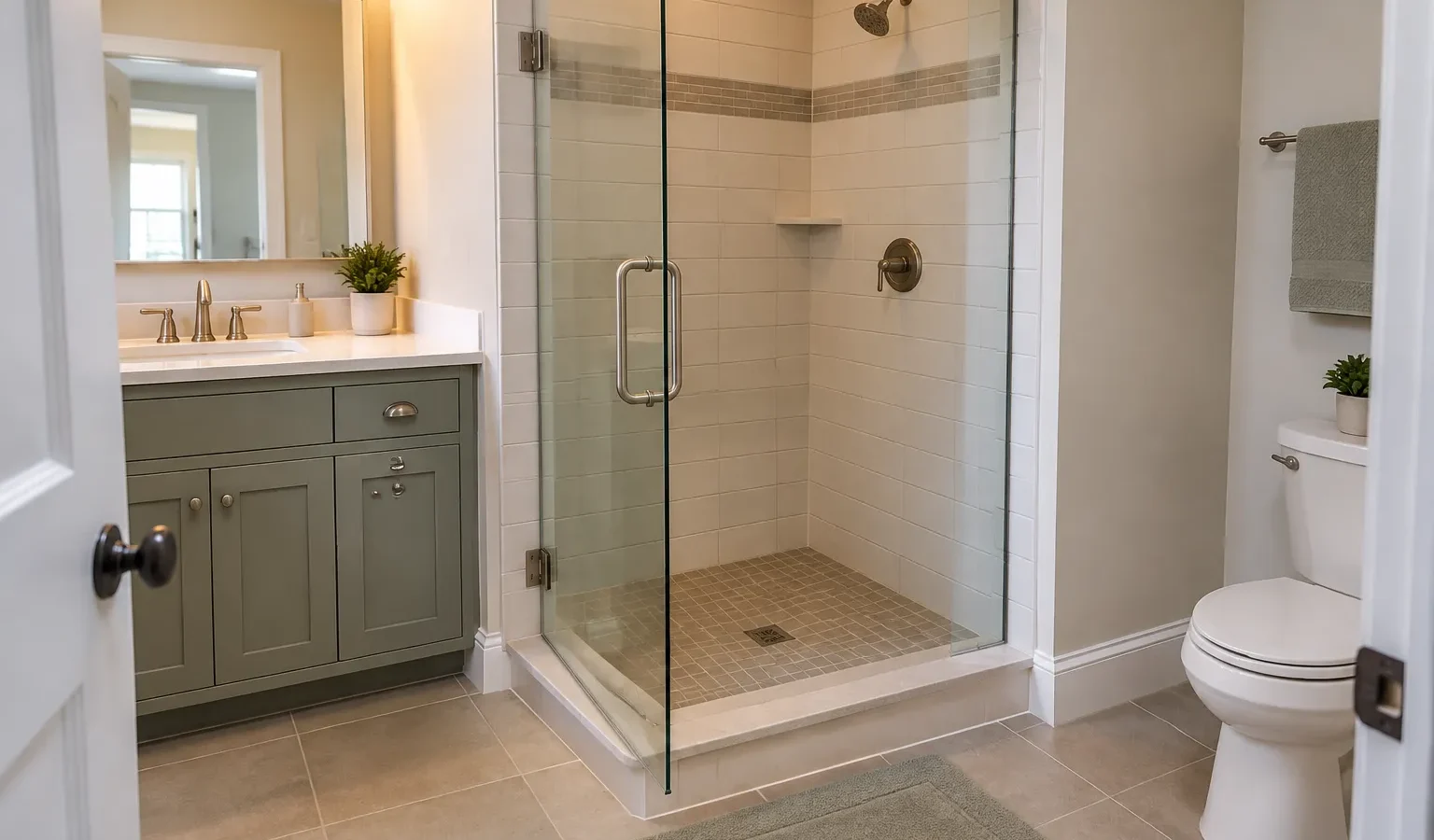
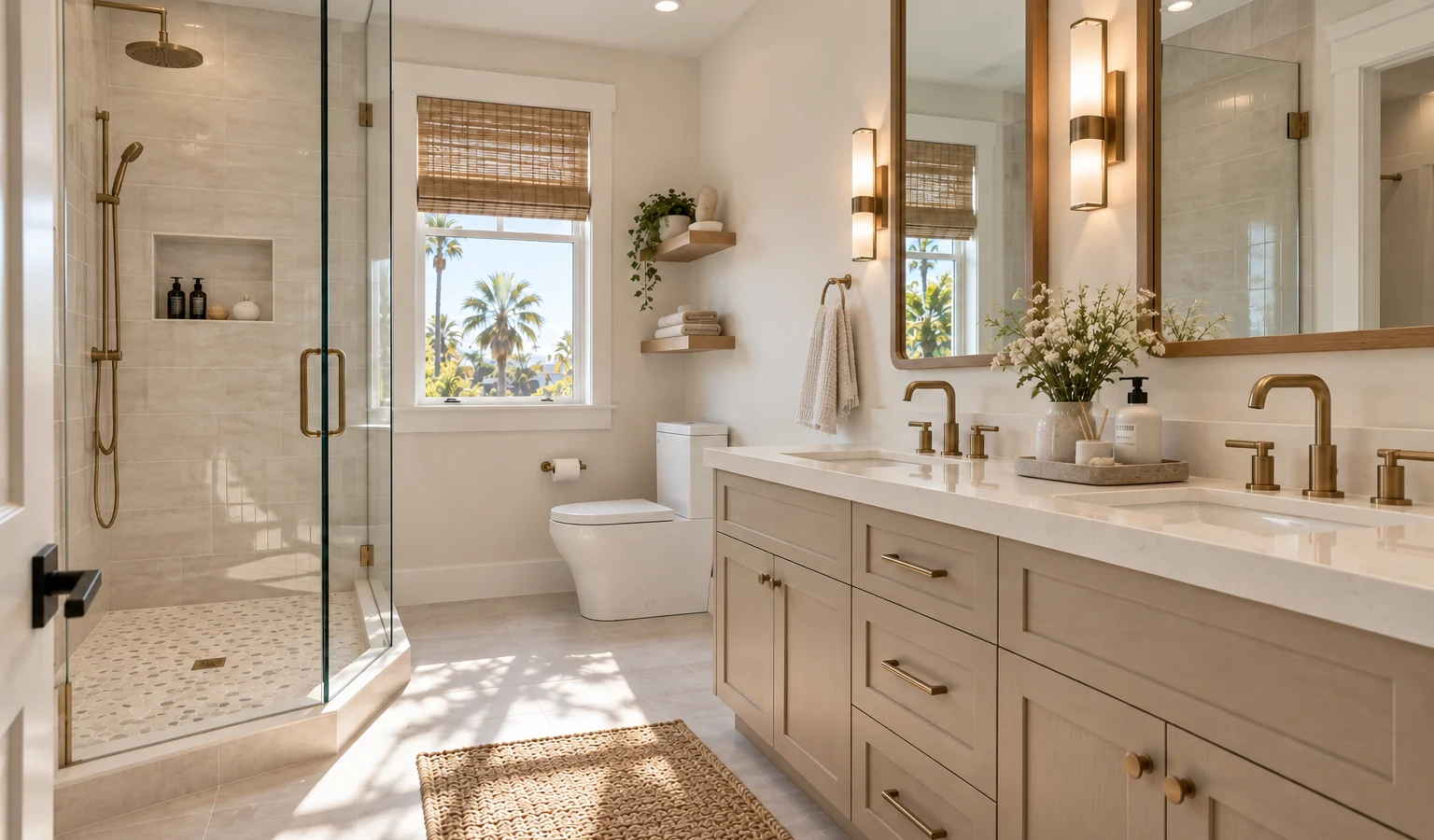
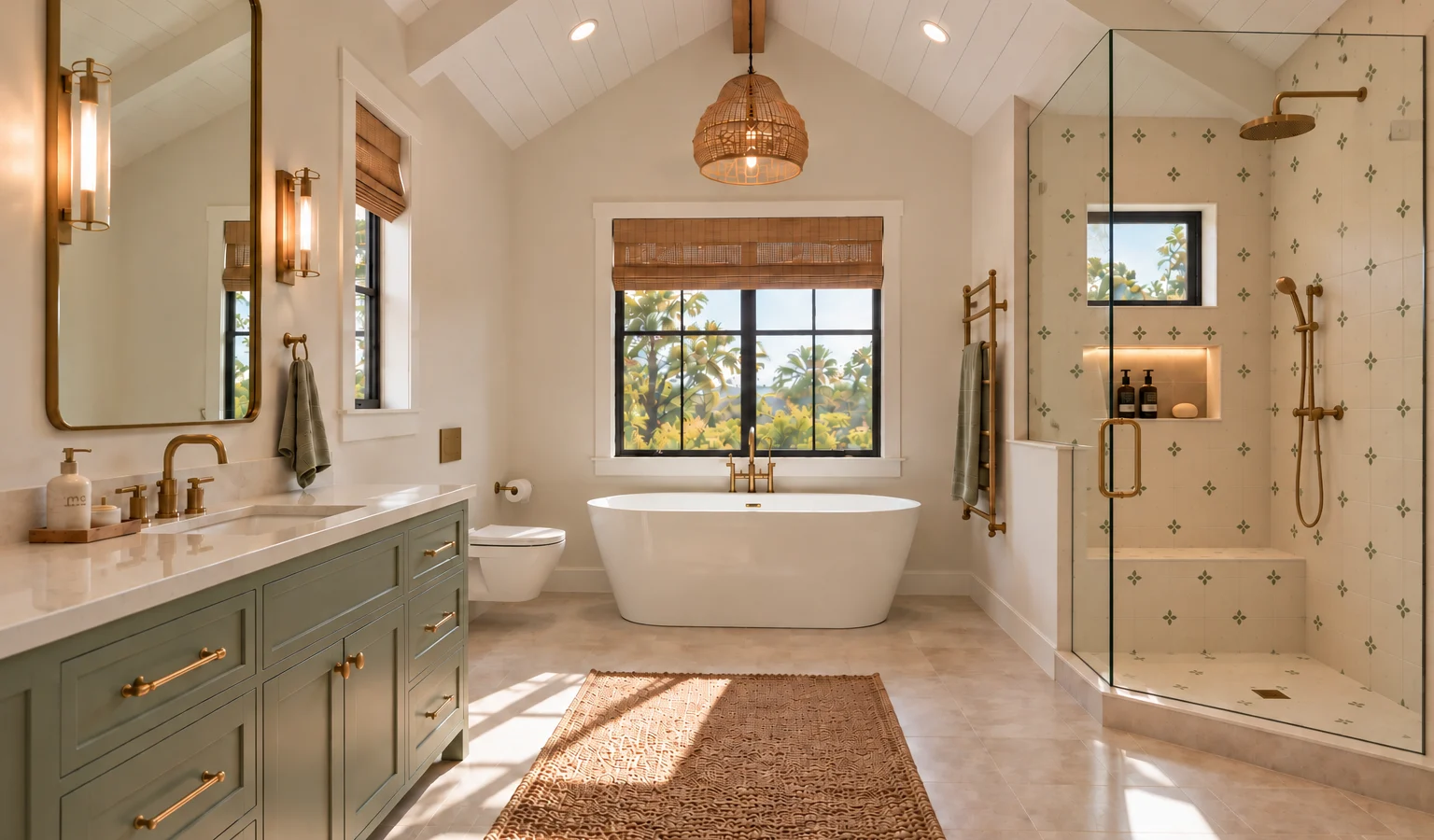
Measure the opening and the room around it, because a door that swings outward needs clear floor and a sliding door needs a track and room for the panel to park. Ask each supplier to mark the swing path on a drawing before quotes are compared.
Who will use it, and how?
The 2010 ADA Standards, which govern public facilities and not private homes, give reference sizes that show how much wider an accessible entry is than a standard door: a transfer shower is 36 by 36 inches clear inside with a 36-inch entry, and a roll-in shower is 30 by 60 inches with a 60-inch entry. If anyone uses a seat, walker or wheelchair, say so before quotes are requested so the entry is sized for them.
Which budget tier fits?
Ask each supplier to quote three tiers for the same opening, say a basic framed door, a semi-frameless door and a fully frameless one, with glass thickness, hardware finish and warranty written out. Compare the written specifications and not the photographs, because two doors that look alike can differ in thickness and hardware. Prices differ by product and installer, so ask each supplier to write the price of each tier beside its specifications.
How much upkeep will you accept?
Decide how often you are willing to wipe glass and tracks, and ask for the maker’s care sheet for the coating and the hardware finish, since cleaning rules differ by product. A door with fewer joints and tracks usually leaves less to clean, but ask the supplier to confirm that for the model you are considering.
What makes the glass safe?
The federal safety standard for architectural glazing materials covers glazing used in shower doors and enclosures, and it requires those products to be built with glazing that meets it. Contra Costa County, California, lists tempered glazing for glass in a wall enclosing a tub or shower where the bottom exposed edge is less than 60 inches above the standing surface, and says it must carry a permanent marking, though a label may be used instead.
Rules differ by place, so ask your own building department what applies, and ask the supplier to show the marking on the glass before it is installed.
The Right Shower Enclosure Fits the Space and the People Using It
Write the five answers on one page and give it to every supplier with the opening dimensions, so each quote describes the same enclosure and can be compared line by line. Keep the care sheets and the glazing marking details with your records, because they are what you will need if a panel is ever replaced.
Photo Gallery

Cost guide
Bathroom Remodel Cost
United StatesNational ranges from what U.S. households paid contractors (Census American Housing Survey 2023). Full remodel is the upper quarter of hired projects. Prices as of August 2026. This is an estimate for planning, not a quote or a guaranteed Goodhaus price. Your actual cost depends on your home, your choices and your contractor, and quotes may be lower or higher. Open the cost calculator
Get Free Quotes