
Article
Patio and Sliding Door Options Come Down to Panel Layout, Frame Material and Glass Ratings
In this article6 sections
Patio doors differ in how their panels move, what the frame is made of and how the glass is rated, so choose the layout and frame first and ask each supplier for the ratings in writing. This is general information and not design advice, and Good Haus is a free matching service and not a contractor.
What is a sliding patio door?
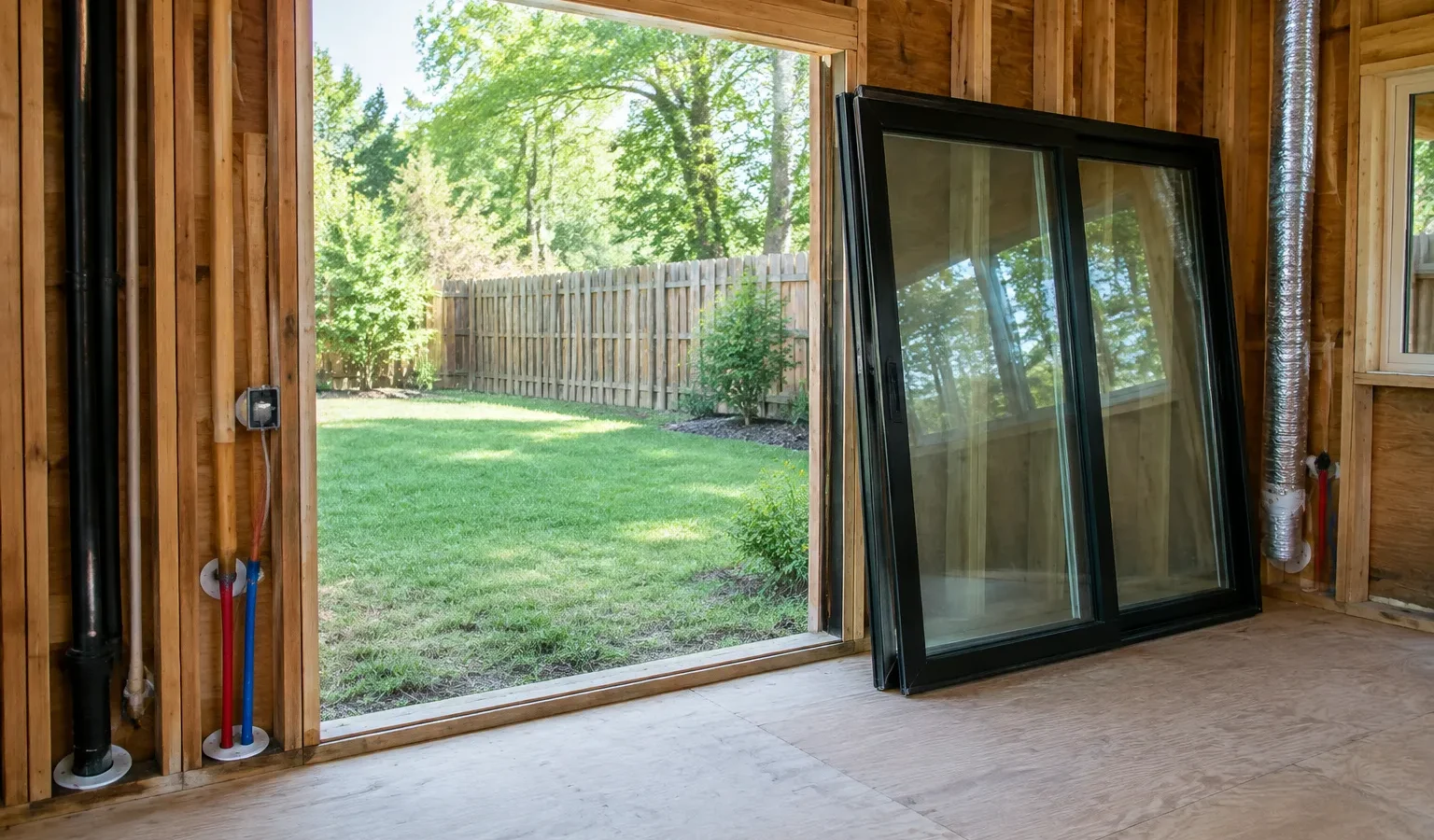
The NFRC Consumer Guide to Windows glossary defines a sliding glass door as a door fitted with one or more panels that move horizontally on a track and/or in grooves. It defines a fixed panel as an inoperable panel of a sliding glass door or slider window. A sliding door can therefore combine a fixed panel with panels that move, so ask the supplier how many panels move and how many are fixed in each option you are shown.
How do frame materials differ?
ENERGY STAR says fiberglass frames are strong, durable, low maintenance, and provide good insulation. It says vinyl frames are low maintenance and provide good thermal insulation. It says aluminum frames are durable, low maintenance, recyclable, and typically have at least 15% recycled content, and that frame design typically includes thermal breaks to reduce conductive heat loss through the metal. It says wood frames are strong, provide good insulation, and are generally favored in historical neighborhoods. Picture a house with wood trim in a historic district: ask the supplier which frame materials the district allows and which one fits the trim.
What do the glass and the ratings tell you?
ENERGY STAR says even doors with lots of glass, like a sliding patio door, have lower glass-to-frame ratios than windows or skylights, which means doors can provide more insulation than a window or skylight can. It says performance criteria for doors are based on the amount of glass they have, called glazing level, and ratings certified by the National Fenestration Rating Council. The NFRC glossary defines a thermal break as an element of low conductance placed between elements of higher conductance to reduce the flow of heat, often used in aluminum windows. Ask each supplier for the rating label for the exact door you are quoted, not for a similar model. Under the United States (federal) consumer product safety standard at 16 CFR Part 1201, glazing materials used or intended for use in storm doors or combination doors, doors, bathtub doors and enclosures, shower doors and enclosures and sliding glass doors must meet the standard. Ask the supplier to show the safety glazing marking on the glass of each patio door option.
Where does each option fit?
Narrow and wide openings can call for different layouts, so ask the supplier to show the layout, the frame and the ratings for your opening side by side. Ask what the frame needs for care over time and how each option opens onto the patio so furniture and screens do not block it.
What should you ask before you request quotes?
- Ask how many panels move in each option.
- Ask which frame materials fit your trim and any local district rules.
- Ask for the rating label of the exact door.
- Ask what care each frame needs.
- Ask what the opening needs before the door can be installed.
Put the Door Layout and Frame Choice in Every Quote Request
Give every supplier the same opening size, layout and frame choice when you request quotes, so each bid prices the same patio door.