Article
A Roof Tie-In Is Where an Addition’s Roof Meets the House, and Plans and Flashing Decide Whether It Stays Dry
In this article8 sections
- 01What does a city want to see for the tie-in?
- 02Why does flashing matter at the join?
- 03What should be checked before the new roof goes on?
- 04Could the cost count toward a flood-zone limit?
- 05What should you ask before you request quotes?
- 06Put the Tie-In Details in Every Quote Request
- 07Photo Gallery
- 08Cost Guide
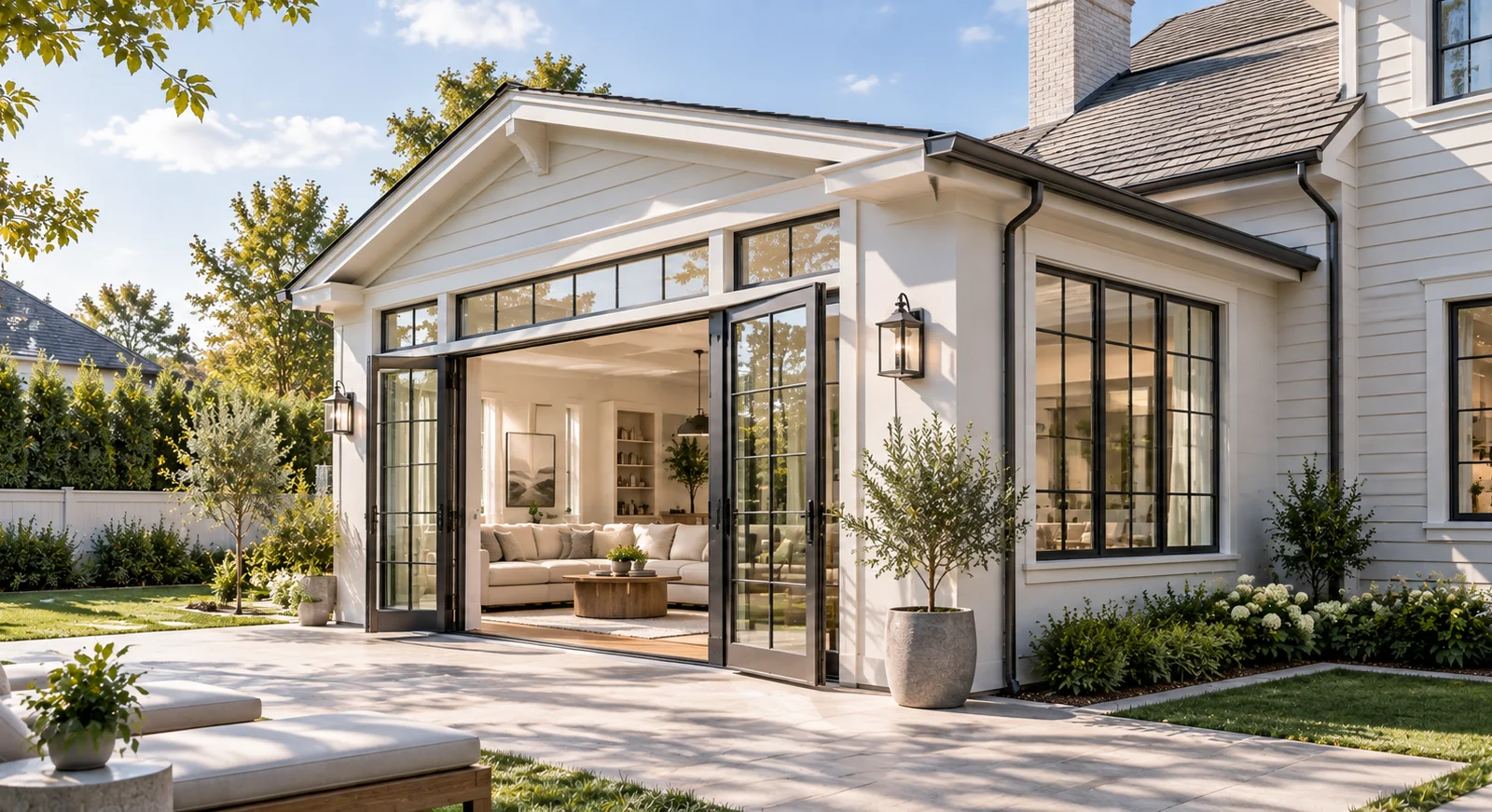
A roof tie-in is the place where an addition’s roof joins the existing roof, so ask who draws it, who seals the truss plans and how each join is flashed before you request quotes. This is general information and not engineering advice, and Good Haus is a free matching service and not a contractor.
What does a city want to see for the tie-in?
The City of Hemet, California, says the roof plan should show the tie-in to the existing roof, HVAC, and flashing requirements. It says the truss calculations and the truss layout shall be signed and sealed by a professional civil or structural engineer. Ask your building department what a roof plan must show for an addition and who prepares and seals it.
Why does flashing matter at the join?
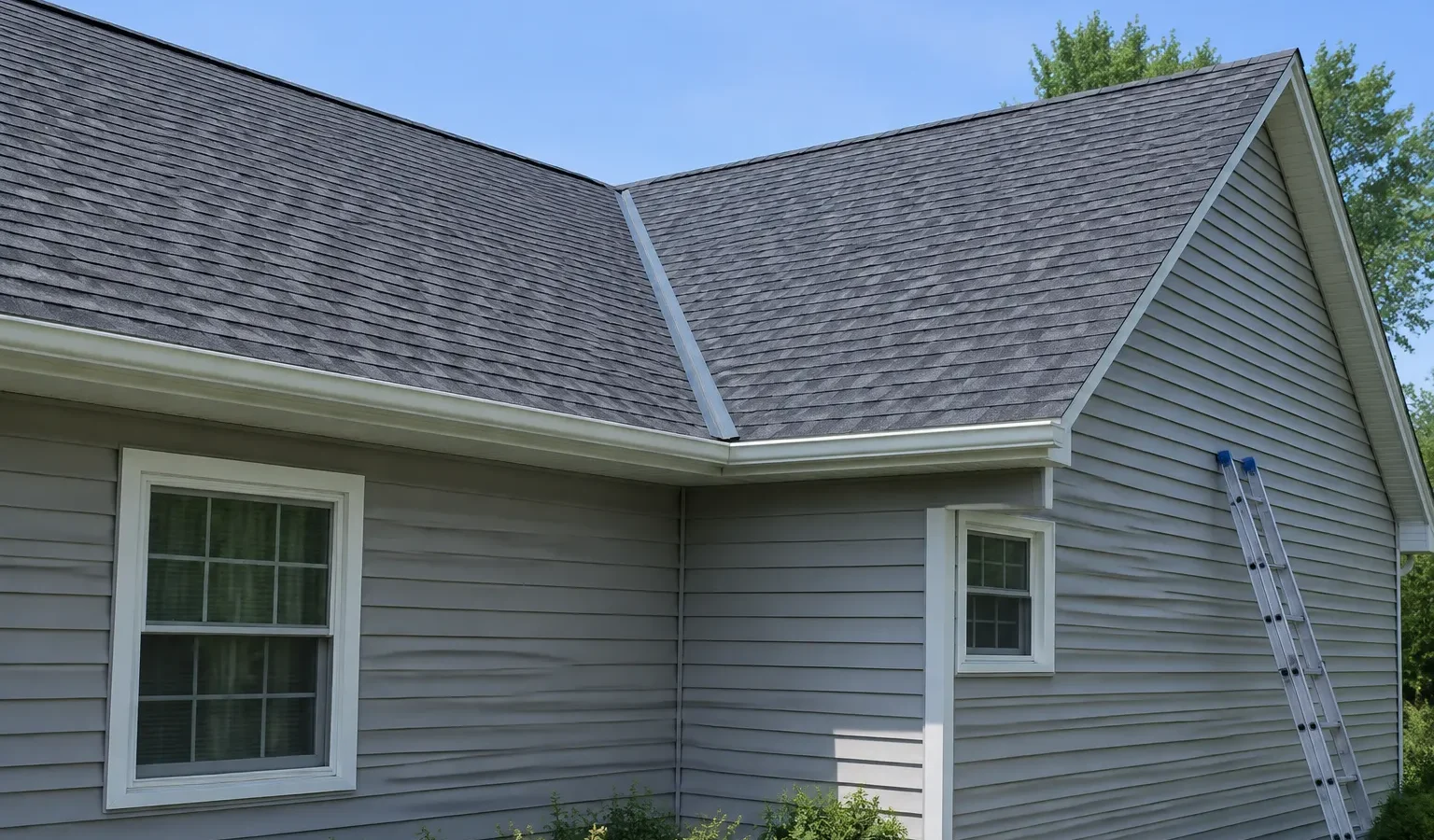
The City of West St. Paul, Minnesota, says flashings shall be installed at all wall and roof intersections, wherever there is a change in roof slope or direction and around all roof openings. It says flashing against a vertical sidewall shall be by the step-flashing method, and that kick out flashing is required at the lower portion of a roof intersecting a wall to divert water away from the wall. It adds that flashing shall be installed to prevent water from entering the wall or roof. Picture a new roof meeting a tall side wall of the old house: ask the roofer where step flashing and kick out flashing will go on that join.
What should be checked before the new roof goes on?
West St. Paul says roof sheathing shall be repaired or replaced if rotted. The tie-in often meets old roof framing and sheathing, so ask the contractor whether the bid includes opening the old roof at the join and replacing anything found rotted.
Could the cost count toward a flood-zone limit?
Under the United States (federal) National Flood Insurance Program rule, an improvement whose cost equals or exceeds 50 percent of the structure’s market value before construction starts is a substantial improvement, and local floodplain administrators apply the rule. If your home is in a flood area, ask your building department how the cost of the addition, including its roof, is counted against your home’s value. Under 44 CFR 60.3(c), a community that participates in the National Flood Insurance Program must require that all new construction and substantial improvements of residential structures within Zones A1-30, AE and AH on its Flood Insurance Rate Map have the lowest floor, including basement, elevated to or above the base flood level, unless FEMA grants the community a basement exception under 60.6, and these are minimum criteria the community adopts in its own ordinance, which may be stricter, in the United States (federal) program. Ask the floodplain administrator whether the project counts as new construction or a substantial improvement and which lowest floor rule then applies.
What should you ask before you request quotes?
- Ask who draws the roof plan and who seals the trusses.
- Ask where flashing goes at every join.
- Ask whether the bid includes opening and repairing the old roof.
- Ask who is responsible if the join leaks.
- Ask how the cost is counted if the home is in a flood area.
Put the Tie-In Details in Every Quote Request
Ask every contractor to describe the roof tie-in and flashing the same way when you request room addition quotes, so each bid prices the same join.
Photo Gallery







Cost guide
Room Addition Cost
United StatesRoom additions are estimated from the cost per square foot of new contractor-built houses (U.S. Census Bureau), an experimental comparison, so only a range is shown. Prices as of August 2026. This is an estimate for planning, not a quote or a guaranteed Goodhaus price. Your actual cost depends on your home, your choices and your contractor, and quotes may be lower or higher. Open the cost calculator
Get Free Quotes