Article
Bathroom Vanity Types: Freestanding, Wall-Hung and Console Options Explained
In this article8 sections
Bathroom vanities come as freestanding, corner, wall-to-wall, wall-hung and console types, each with its own fit, and the label and care notes from named sources help you ask each bidder for the exact type and its care terms. The maker statements apply to those makers’ products only, and this guide ranks no type and gives no price.
Which vanity types are there?
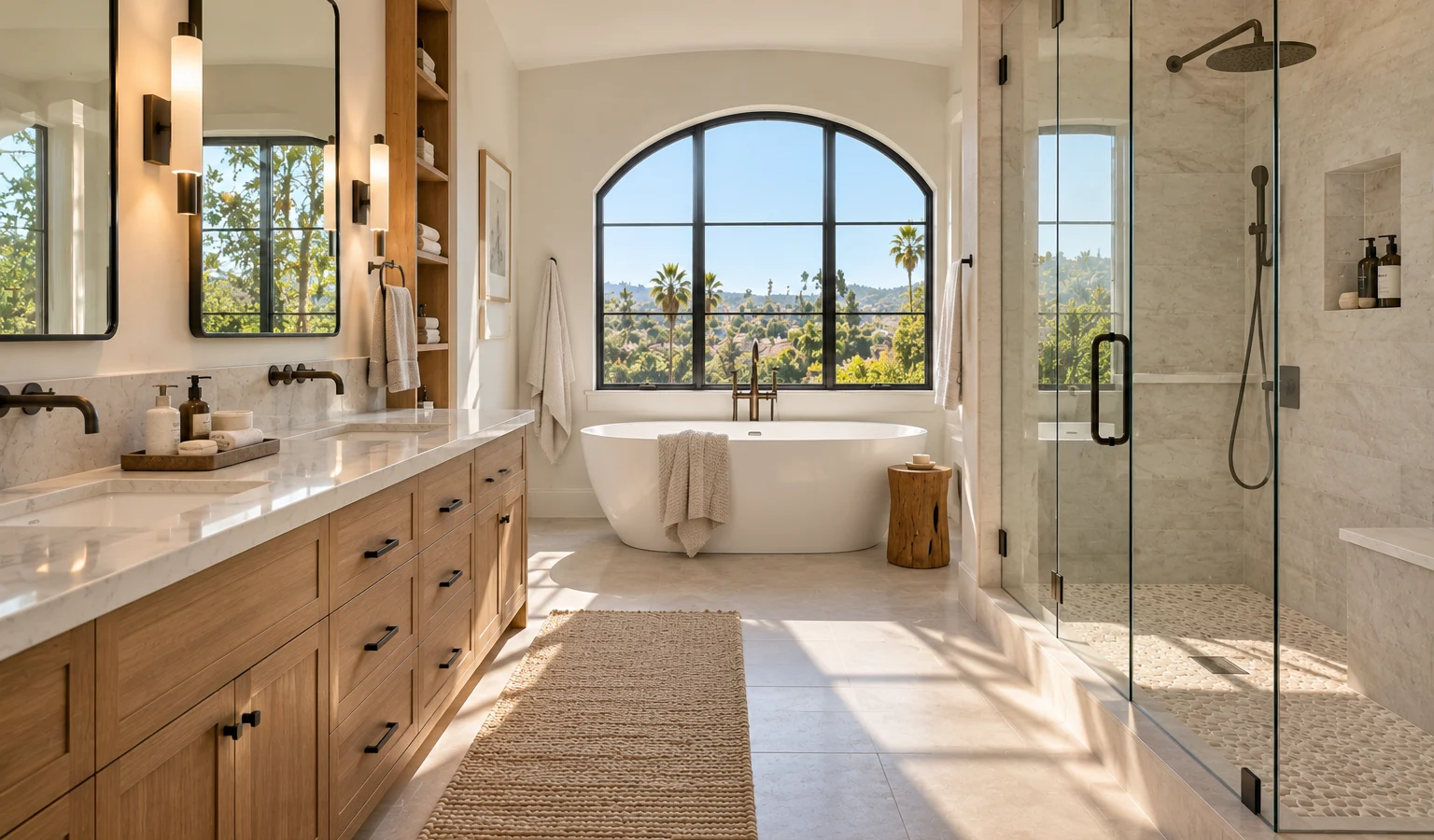
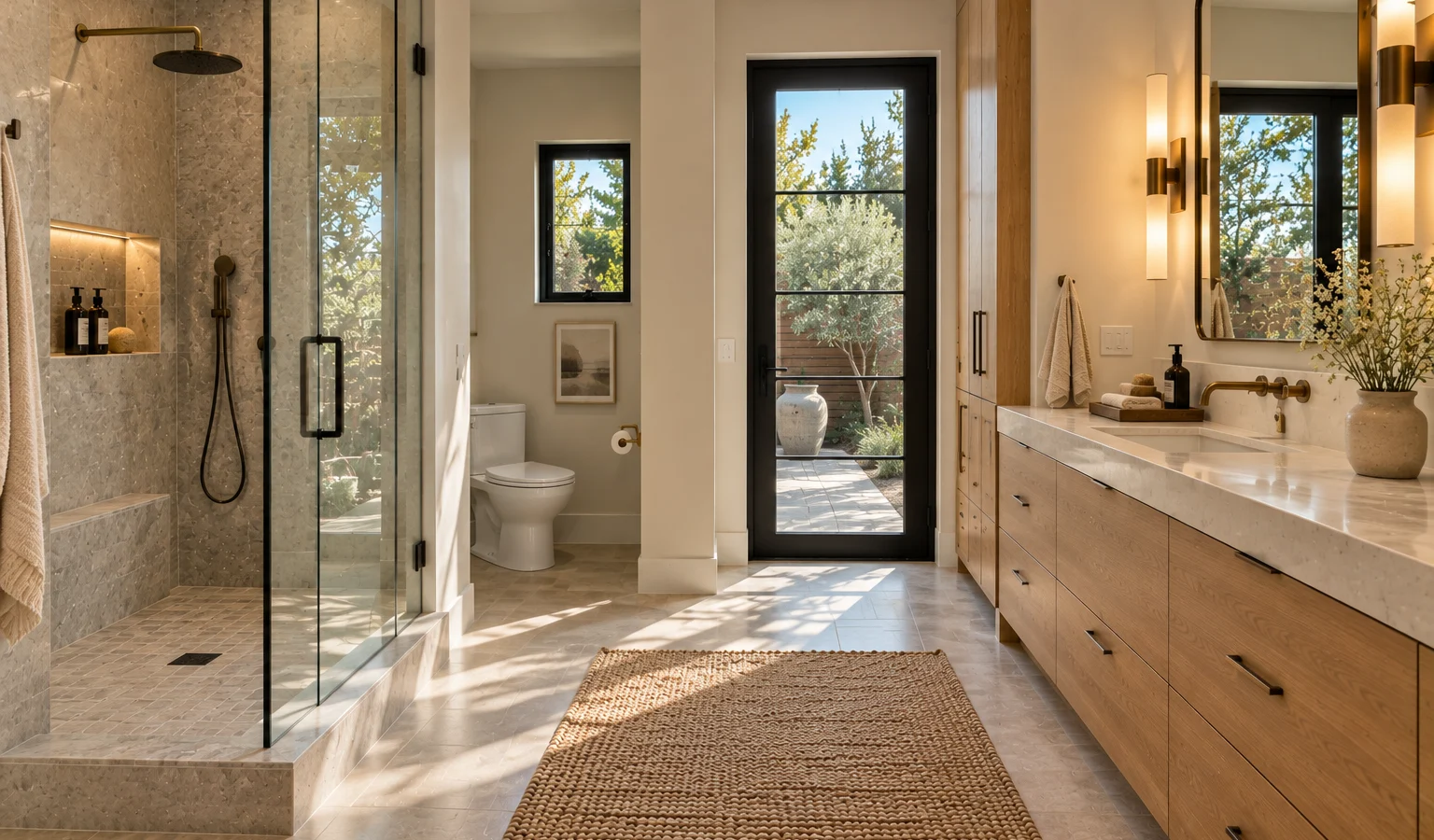
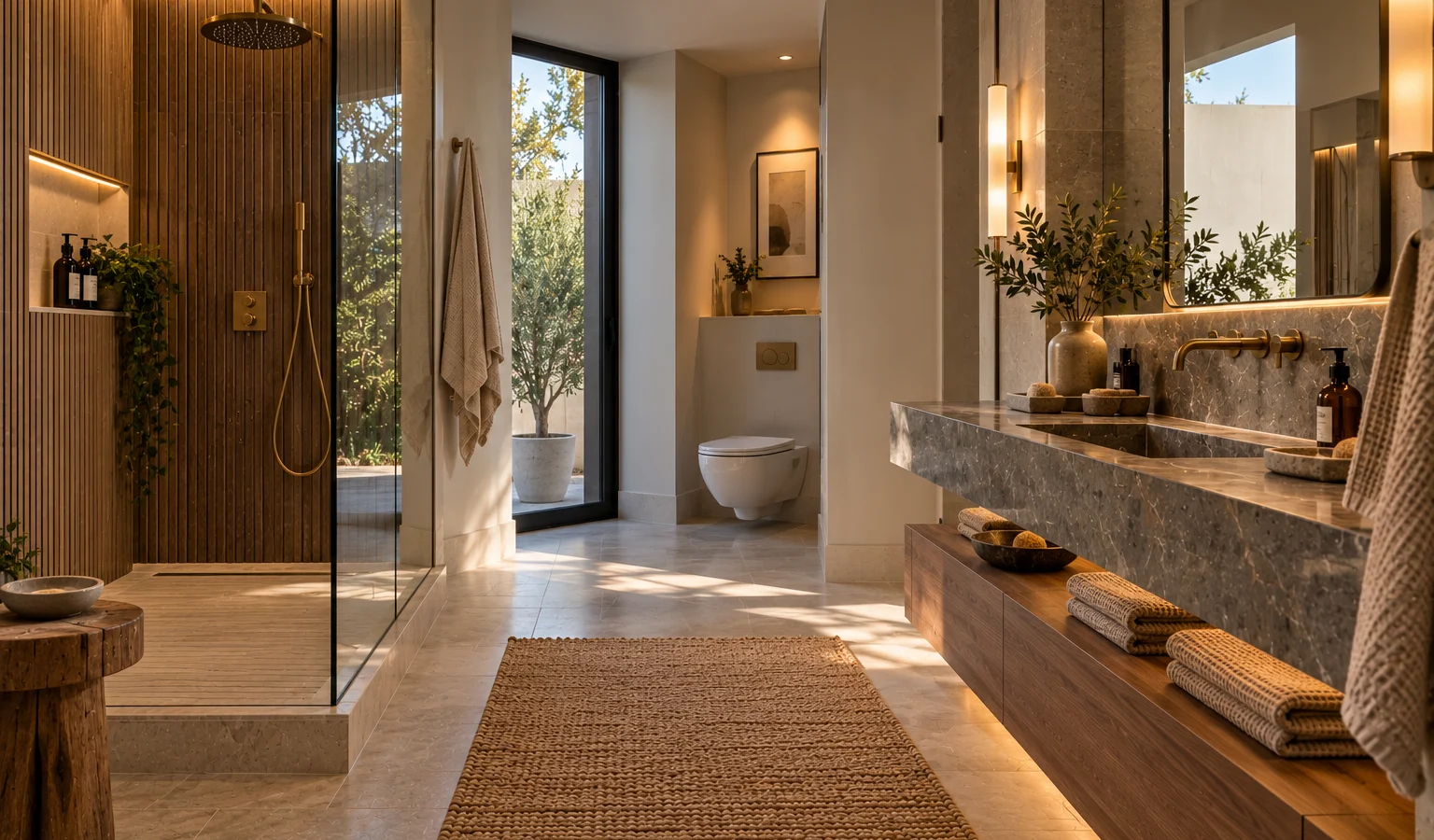
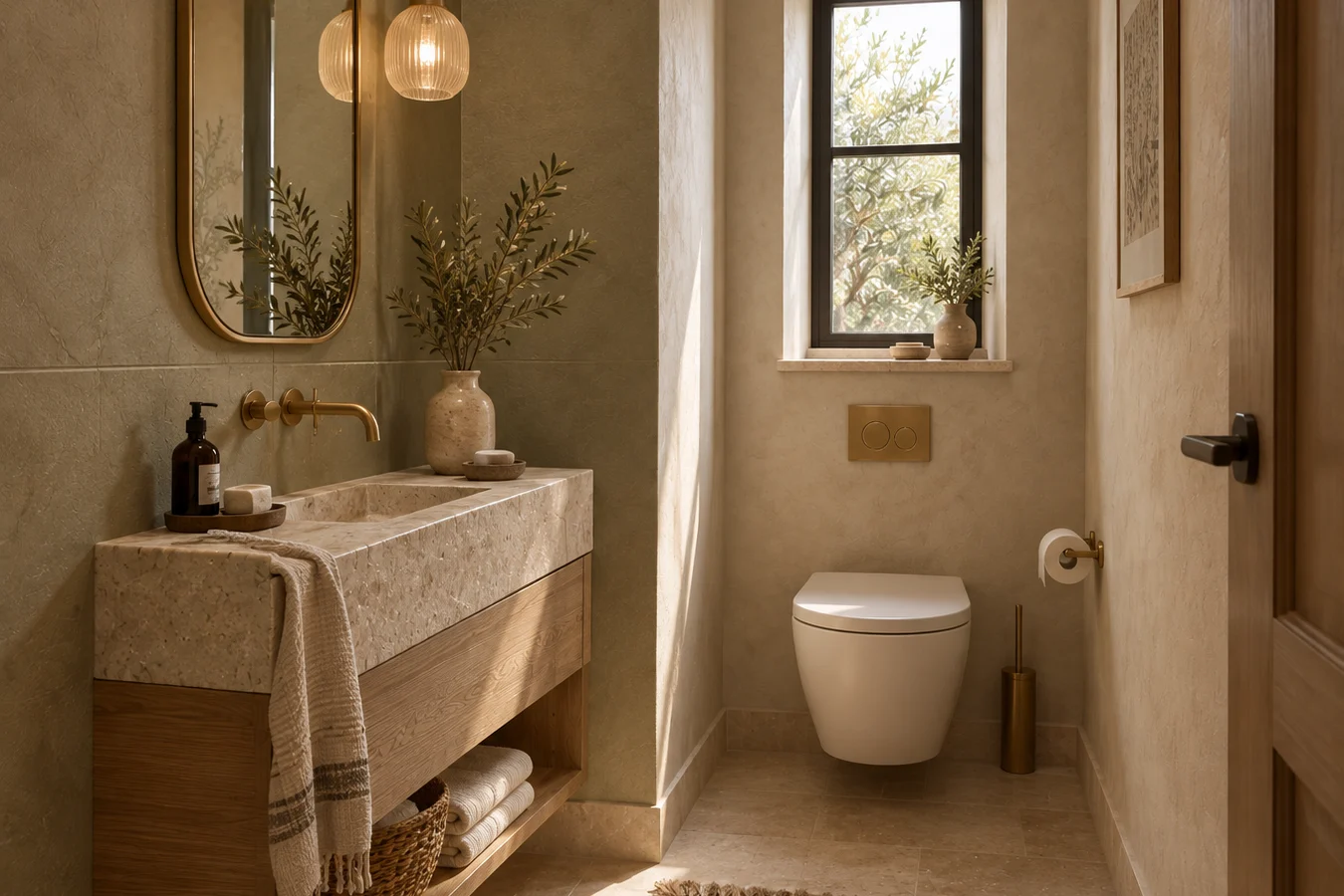
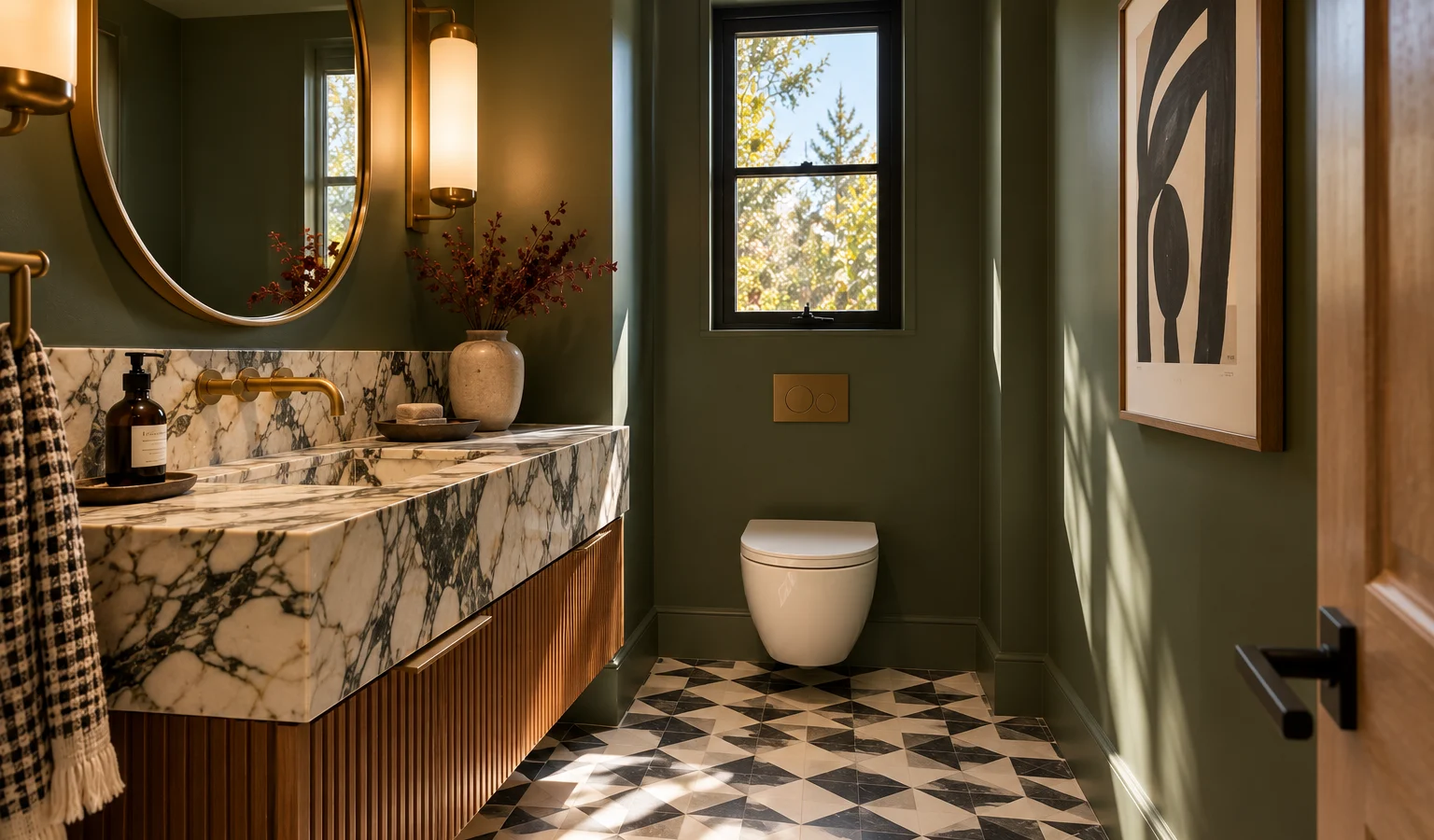
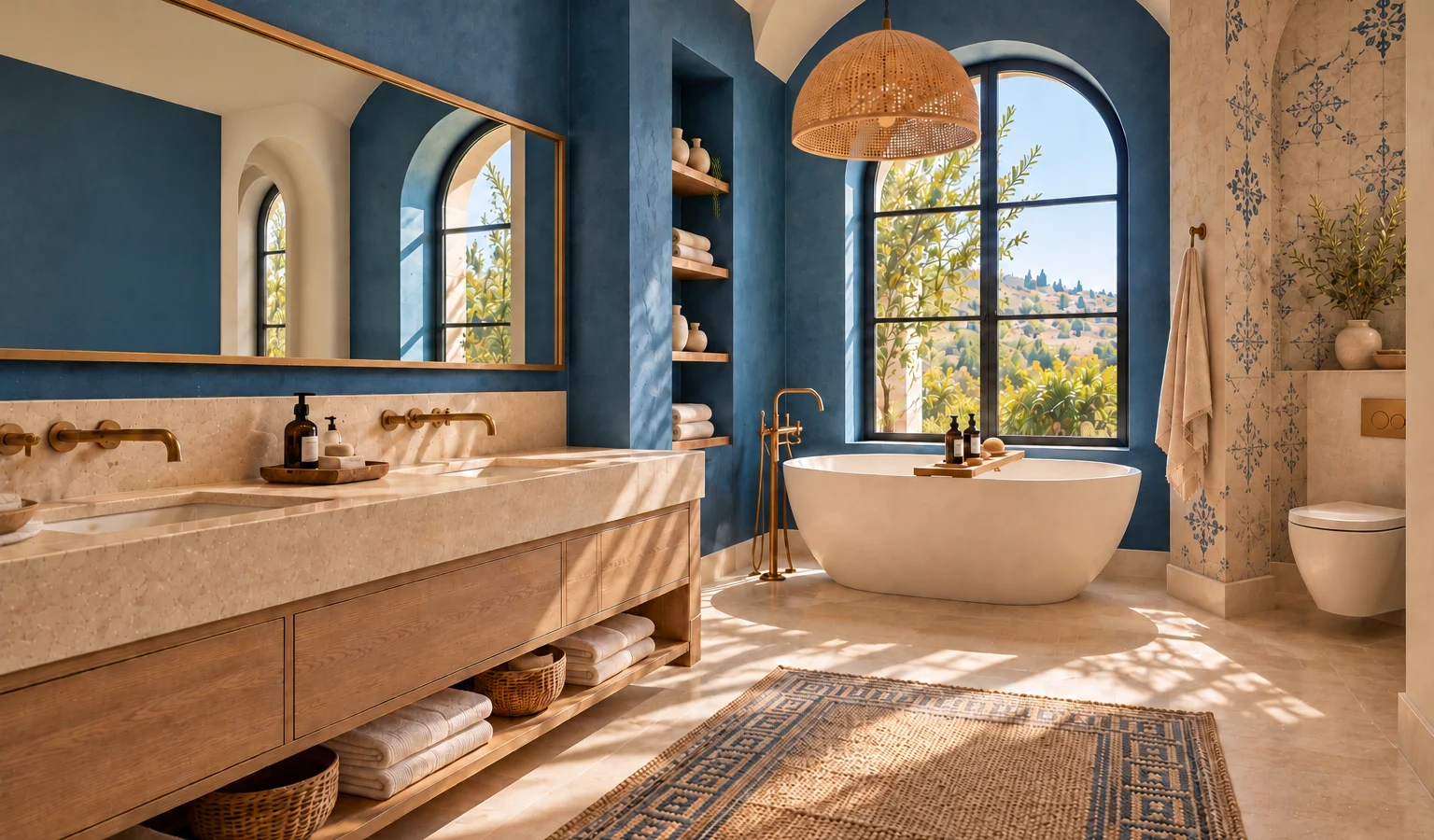
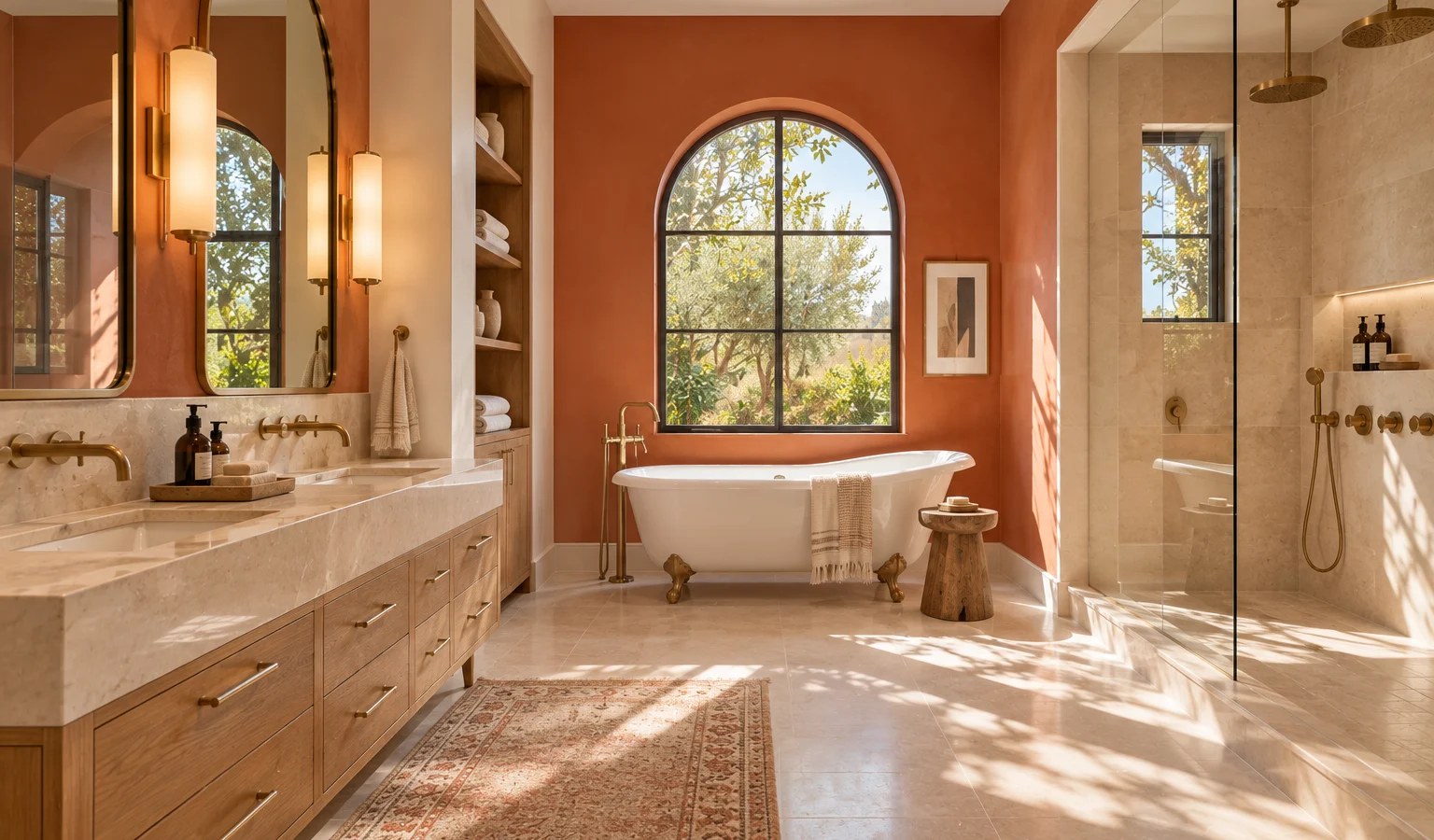
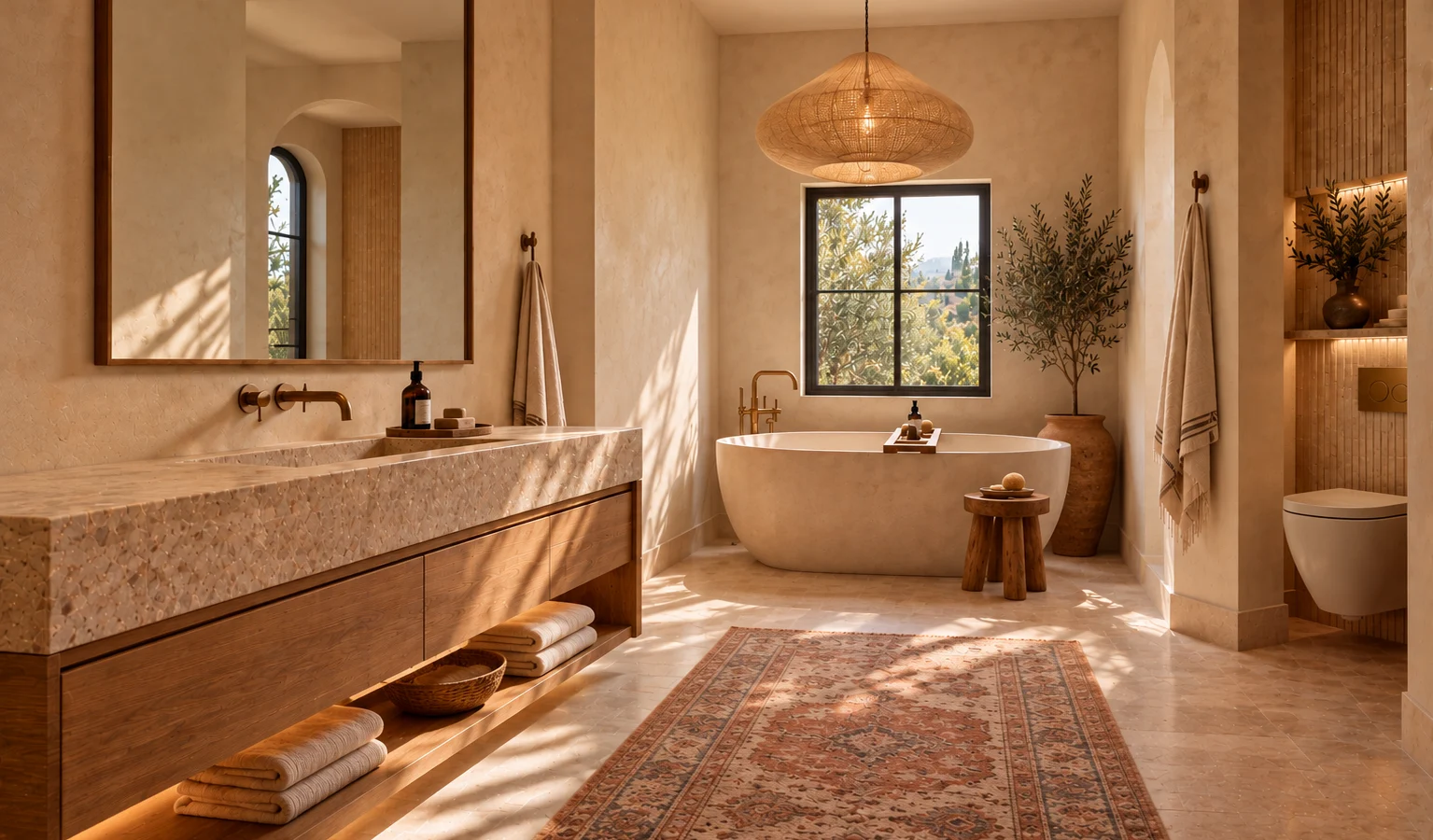
KraftMaid, a cabinet maker, says vanity base cabinets are much like kitchen cabinets, sit on the floor of the bathroom, and can be freestanding with two exposed sides, installed in a corner with one exposed side, or run from wall to wall with no exposed sides for a built-in look. It says wall-hung vanity cabinets, also called floating vanity cabinets, attach to the wall and leave the area beneath them exposed, that having more visible floor can make a bathroom appear larger and that there are fewer obstructions to clean around. It says a console vanity looks like a side table or buffet repurposed for a faucet and sink, with legs on all four sides and a bottom shelf beneath the closed doors that offers open storage.
How do the types compare?
| Type | What KraftMaid says | What to ask |
|---|---|---|
| Freestanding base | Two exposed sides, and base cabinets maximize storage | Which sides are visible and finished |
| Corner or wall-to-wall base | One or no exposed sides for a built-in look | How the cabinet meets the walls and the floor |
| Wall-hung | Leaves the area beneath exposed, shows more floor and has fewer obstructions to clean around | What structure is added behind the wall and who supplies it |
| Console | Legs on all four sides and a bottom shelf with open storage | How the plumbing is concealed and how much closed storage there is |
What do sizes and the wall structure matter for?
KraftMaid says 21-inch-deep vanity cabinets maximize counter space and can accommodate a larger sink, while 18-inch-deep cabinets are designed for tighter spaces where you may need to work around toilet bowls or door openings. It says a standard bathroom vanity height is about 32 inches, that many people prefer comfort-height vanities of 36 inches, the same height as kitchen counters, and that standard height may suit a home with young children who need to reach into the sink. It says to plan on adding structure behind the finished wall to secure a wall-hung vanity, so you have a solid installation.
How does wood move, and what is the faucet label?
Omega Cabinetry’s page says the wood’s natural properties determine how each piece reacts to changing weather conditions, so eliminating warped doors completely is virtually impossible, and that maintaining proper temperature and humidity levels in the home provides the environment for optimal cabinet performance. The Environmental Protection Agency says it has WaterSense labeling criteria only for private lavatory and bar sink faucets, and that WaterSense labeled bathroom sink faucets and accessories using a maximum of 1.5 gallons per minute can reduce a sink’s water flow by 30 percent or more from the standard 2.2 gallons per minute without sacrificing performance. WaterSense is a voluntary label and not a legal limit, so ask the bidder which faucet the quote assumes and whether it carries the label.
Under the United States (federal) rule at 10 CFR 430.32(o), kitchen faucets, lavatory faucets and their replacement aerators manufactured after January 1, 1994 are capped at 2.2 gallons per minute measured at 60 pounds per square inch, which is a manufacturing standard, and states and localities may set lower limits for installation.
For an alteration or improvement to an older California home, California Civil Code 1101.4(a) makes replacement of all noncompliant plumbing fixtures with fixtures meeting current building standards for new construction a condition of final permit approval or a certificate of final completion, and the rule is statewide, not a county option. If your California home is an older one, ask the bidder whether a permitted vanity change will pull in other fixtures you did not plan to replace, and ask for that cost on its own line.
Which questions pin down the exact vanity?
- Ask which vanity type, depth and height each quote assumes and request the maker’s care sheet.
- Ask what structure is added behind the wall for a wall-hung unit.
- Ask how the plumbing is concealed on a console.
- Ask which faucet is assumed and whether it carries the WaterSense label.
- Ask for the same written scope for every type so the quotes compare.
Choose the Type and Put It in One Written Scope
Ask each bidder to name the vanity type, the depth, the height, the faucet and the wall structure on one written scope, so the quotes compare on the same vanity.
Photo Gallery
Cost guide
Bathroom Remodel Cost
United StatesNational ranges from what U.S. households paid contractors (Census American Housing Survey 2023). Full remodel is the upper quarter of hired projects. Prices as of August 2026. This is an estimate for planning, not a quote or a guaranteed Goodhaus price. Your actual cost depends on your home, your choices and your contractor, and quotes may be lower or higher. Open the cost calculator
Get Free Quotes