Article
Flush, Downrod, Sloped and Damp-Rated Ceiling Fans for a Remodel
In this article10 sections
- 01Flush-mount and hugger fans for low ceilings
- 02Standard and extended downrod mounts
- 03Sloped mounts for angled ceilings
- 04Damp and wet location ratings
- 05Balancing a wobbly fan after installation
- 06What the ceiling box and framing mean
- 07Is a whole-house fan the same job?
- 08Getting the most from any ceiling fan type
- 09Photo Gallery
- 10Cost Guides
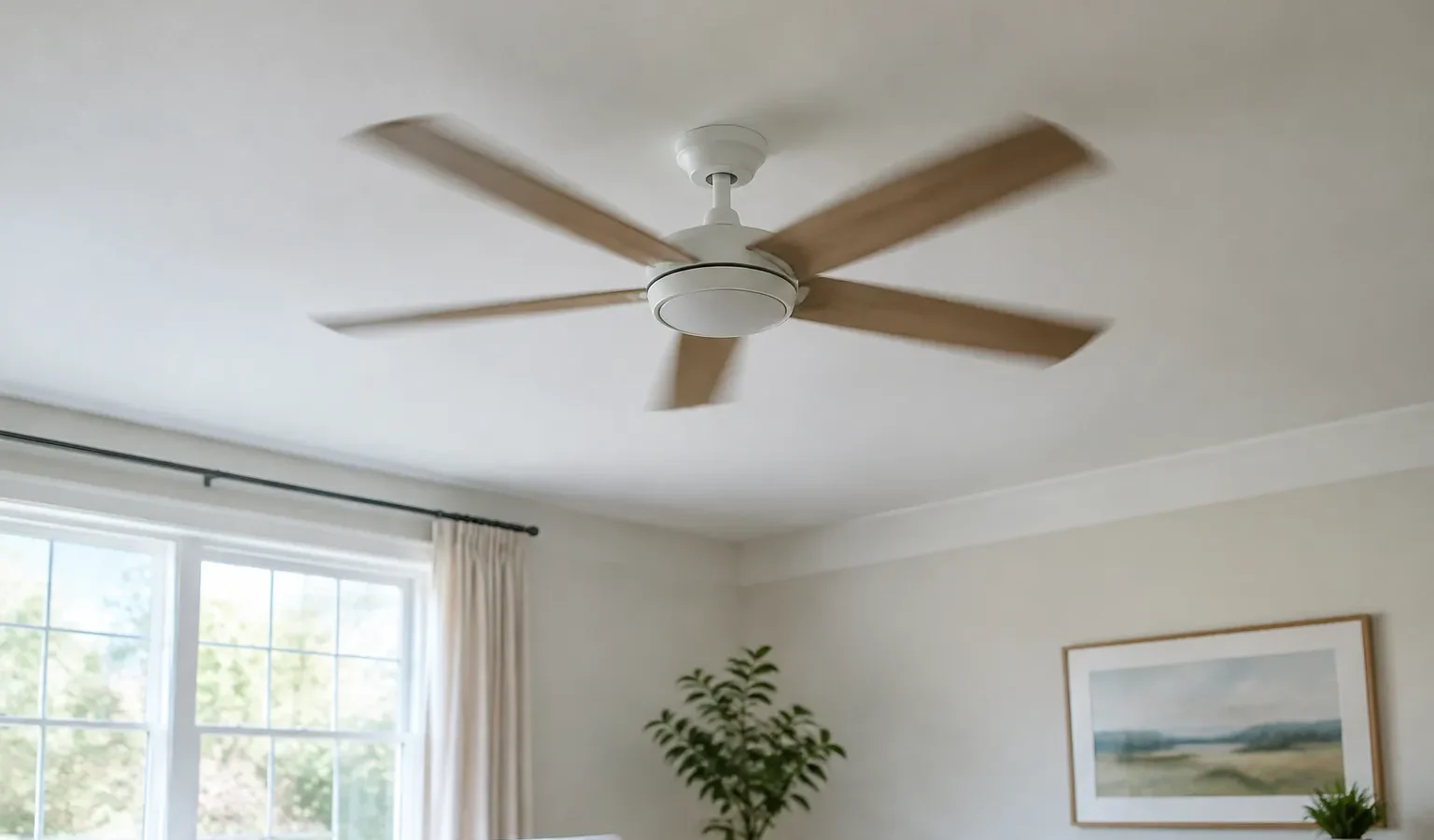
ENERGY STAR says flush mounts anchor the fan directly against the ceiling, standard mounts use a short downrod, extended mounts hang the fan lower from tall ceilings, and sloped mounts are used for angled or vaulted ceilings. For a bathroom or other humid room it advises a fan UL listed with a damp rating, and for a patio or front porch a UL wet rating.
Flush-mount and hugger fans for low ceilings
Flush mounts anchor the fan directly against the ceiling. ENERGY STAR says most standard fans can be installed as a flush mount.
Hugger fans are ideal for rooms that have ceilings under 8 feet in height or where a fan with optional light would hang down too low. Hugger fans will not move as much air as a regular fan because the blades are closer to the ceiling.
Standard and extended downrod mounts
Standard mounts come with a 3 to 5 inch downrod, which is the metal pipe that extends from the ceiling bracket to the top of the fan. Downrods are usually either 1/2 or 3/4-inch in diameter.
Extended mounts can be used to hang the ceiling fan at the desired 8 to 9 feet from the floor for tall ceiling heights. ENERGY STAR says downrods can be purchased from 6 inches (9 ft ceiling) to 120 inches (20 ft ceiling), and suggests checking with the manufacturer or sales associate to determine the right downrod length.
Sloped mounts for angled ceilings
Sloped mounts are used for angled or vaulted ceilings.
Damp and wet location ratings
For a bathroom or other humid location, ENERGY STAR advises a fan that has been UL listed with a damp rating. For fans that may come in direct contact with water, like on a patio or front porch, it advises a UL wet rating. These fans include features such as sealed or moisture resistant motors, rust resistant housing, stainless steel hardware, and all weather blades.
Balancing a wobbly fan after installation
ENERGY STAR says all fan blades should be balanced prior to shipment; however, if the fan is wobbly after installation, there are ways to fix it. First, make sure that all connections are properly aligned and tightly fastened.
Then check the alignment of the blades by holding a yardstick vertically along the edges; ENERGY STAR says you may be able to gently bend a misaligned blade holder back into proper place. If all blades are aligned, a balancing kit can then be used to pinpoint the culprit.
What the ceiling box and framing mean
Ceiling fans should be installed in the middle of the room and at least 7 feet above the floor and 18 inches from the walls; if ceiling height allows, ENERGY STAR suggests 8 to 9 feet above the floor for optimal airflow. The electrical box is mounted above the ceiling and is also the point where the fan is attached, and ENERGY STAR says that if you are replacing a ceiling fixture, most likely you will need to replace the electrical box.
If possible, the ceiling fan should be anchored to a ceiling joist. Where the joist is not located in the center of the room, a special ceiling fan mounting bracket with spiked ends should be installed between joists. ENERGY STAR notes that ceiling fans can weigh as much as 50 pounds, and that consumers should read and understand manufacturer instructions before attempting to install a ceiling fan. The sources here do not say how older wiring, boxes or ceilings change the job. Ask a licensed electrician to shut off the power, replace any box and wire the fan.
Is a whole-house fan the same job?
No, it is a different product. Building America says traditional whole-house fans were mounted in the ceiling and pulled air directly upward from the living space into the attic, and they often required a ceiling joist to be cut because they were too large to fit between joists.
Getting the most from any ceiling fan type
Ceiling fans cool people, not rooms, so ENERGY STAR advises turning off the fan if the room is unoccupied. In the summer, use the ceiling fan in the counterclockwise direction; the airflow produced creates a wind-chill effect. In the winter, reverse the motor and operate the fan at low speed in the clockwise direction, which produces a gentle updraft that forces warm air near the ceiling down into the occupied space.
Good Haus is a free matching service and does not perform the work, so confirm each contractor’s credentials directly.
Photo Gallery








Cost guide
Bathroom Remodel Cost
United StatesNational ranges from what U.S. households paid contractors (Census American Housing Survey 2023). Full remodel is the upper quarter of hired projects. Prices as of August 2026. This is an estimate for planning, not a quote or a guaranteed Goodhaus price. Your actual cost depends on your home, your choices and your contractor, and quotes may be lower or higher. Open the cost calculator
Get Free QuotesCost guide
Kitchen Remodel Cost
United StatesNational ranges from what U.S. households paid contractors (Census American Housing Survey 2023). Full remodel is the upper quarter of hired projects. Prices as of August 2026. This is an estimate for planning, not a quote or a guaranteed Goodhaus price. Your actual cost depends on your home, your choices and your contractor, and quotes may be lower or higher. Open the cost calculator
Get Free QuotesCost guide
Room Addition Cost
United StatesRoom additions are estimated from the cost per square foot of new contractor-built houses (U.S. Census Bureau), an experimental comparison, so only a range is shown. Prices as of August 2026. This is an estimate for planning, not a quote or a guaranteed Goodhaus price. Your actual cost depends on your home, your choices and your contractor, and quotes may be lower or higher. Open the cost calculator
Get Free Quotes