Article
Kitchen Countertop Types Differ in Heat Limits, Sealing and Repairability
In this article8 sections
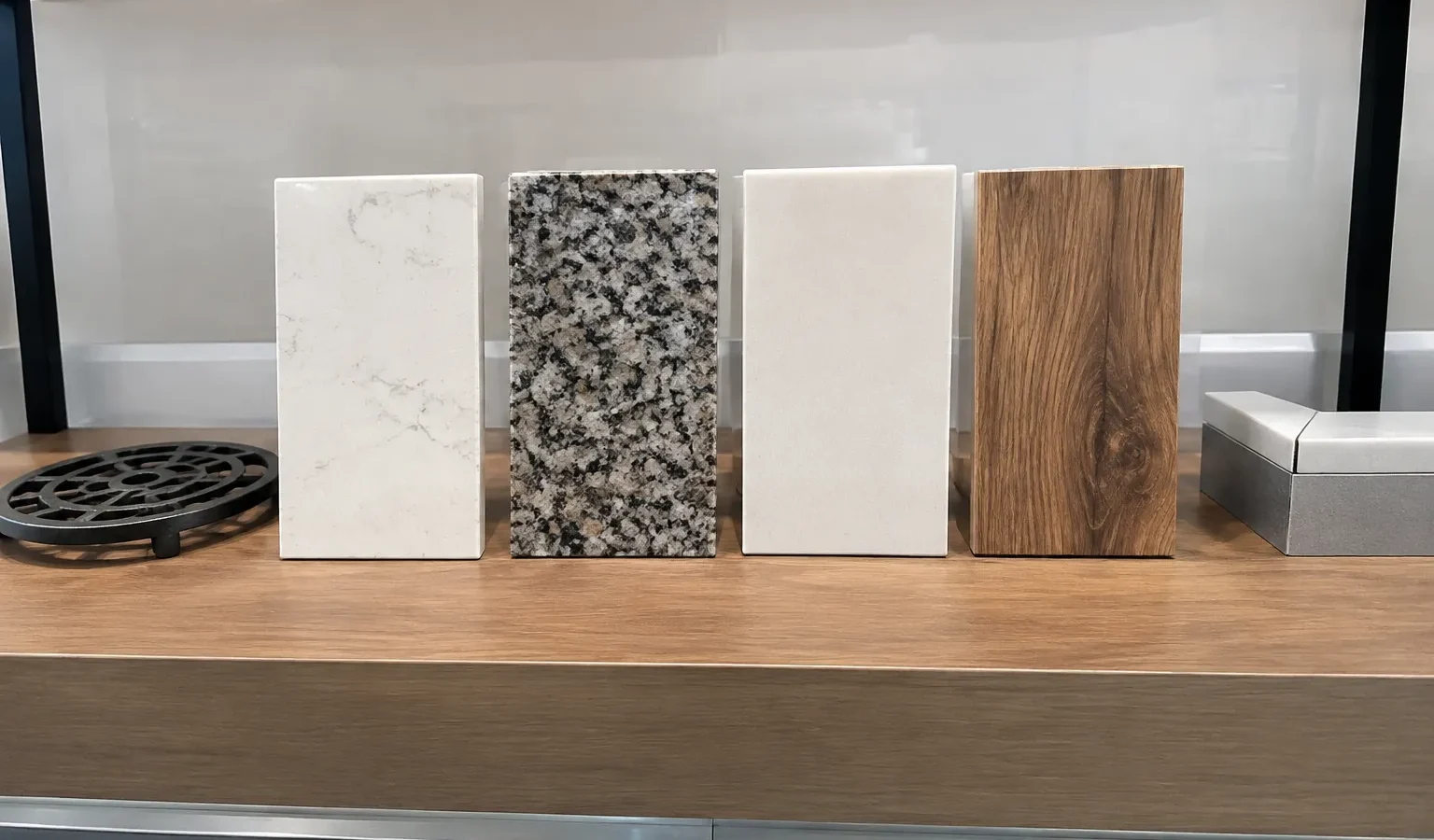
Kitchen countertop types differ in how they handle heat, whether they need sealing and whether damage can be repaired, so compare quartz, natural stone, solid surface and laminate on those points and ask how the stone is cut. These are makers’ and associations’ statements about their own materials, so ask the seller for the care guide of the exact product.
| Type | What the source says | Ask |
|---|---|---|
| Engineered quartz | Caesarstone says quartz is 90 percent ground quartz and 10 percent resins and pigments, is heat-resistant but not heat-proof and can sustain burn marks that cannot be repaired | Whether the maker’s trivet advice is in the warranty |
| Natural stone | The Natural Stone Institute says sealing makes stone more stain resistant and not stain proof, and that acids may dull or etch calcareous stone | Which stone it is and whether it is calcareous |
| Solid surface | Corian says liquids cannot penetrate it and most damage, including heat or chemical damage, can usually be repaired on site | What repair the maker supports |
| Laminate | Formica says water can penetrate seams and swell the substrate | Where the seams fall near the sink |
What do the sources say about quartz?
Caesarstone says quartz is a man-made product made with natural materials and composed of 90 percent ground quartz and 10 percent resins and pigments. It says quartz is heat-resistant but not heat-proof, can only withstand heat for a brief time and can sustain burn marks in extreme temperatures that cannot be repaired, so it advises always using heat pads or trivets under hot cookware or appliances.
What about natural stone?
The Natural Stone Institute says to clean stone with a neutral cleaner, stone soap or a mild liquid dishwashing detergent and warm water. It says calcareous stone, composed mainly of calcium carbonate, is sensitive to acidic solutions so mild non-acidic cleaners are recommended, and that products containing lemon, vinegar or other acids may dull or etch it. The Institute says sealing does not make stone stain proof but makes it more stain resistant. Ask the stone supplier which stone the slab is, whether it needs sealing and which cleaners to avoid.
What about solid surface and laminate?
Corian says liquids cannot penetrate its solid surface, that a damp microfiber cloth with a standard household kitchen spray should remove most stains and that dark colors may show light scratches more readily. Corian says to use heat trivets or pads under hot objects, and that because the material is solid and homogeneous all the way through most damage, including severe impact, heat or chemical damage, can usually be repaired on site. Formica says to take care not to flood laminate, especially near seams, since water can penetrate and cause the substrate to swell. Ask where the seams fall relative to the sink and what repair the maker supports for the product.
What dust safety question applies to stone and quartz?
OSHA and NIOSH say exposure to silica is a health hazard to workers manufacturing, finishing and installing natural and engineered stone countertops, in fabrication shops and during on-site finishing and installation. They say workers who inhale very small dust particles containing respirable crystalline silica are at risk of silicosis, an incurable, progressively disabling and potentially fatal lung disease, and they advise avoiding dry cutting, grinding and sweeping and the use of compressed air. Ask the fabricator and the installer how they control dust and whether cutting is done wet or in the shop.
What should you ask before you choose?
- Ask the seller for the care guide of the exact slab or sheet.
- Ask how the maker treats heat, burns and trivets in its warranty.
- Ask whether the material needs sealing and how often.
- Ask where the seams fall and what repair the maker supports.
- Ask the fabricator how dust is controlled when the countertop is cut and installed.
Choose the Surface by Heat and Sealing and Repair
Keep the care guide and the fabricator’s dust control answer with your project papers, and when you request kitchen remodeling quotes, ask each contractor which countertop material and which installer practices the price assumes.
Photo Gallery






Cost guide
Kitchen Remodel Cost
United StatesNational ranges from what U.S. households paid contractors (Census American Housing Survey 2023). Full remodel is the upper quarter of hired projects. Prices as of August 2026. This is an estimate for planning, not a quote or a guaranteed Goodhaus price. Your actual cost depends on your home, your choices and your contractor, and quotes may be lower or higher. Open the cost calculator
Get Free Quotes