Article
Shower Enclosures and Glass Doors: Types, Glazing Rules and Care Questions to Settle Before Ordering
In this article9 sections
- 01Which shower door and enclosure types do the sources describe?
- 02What must the glass be?
- 03How are glass doors cared for?
- 04What slip and support options belong beside the enclosure?
- 05How do the options compare?
- 06What should every enclosure bid list?
- 07Put the Enclosure Type and Care Sheet in the Written Scope
- 08Photo Gallery
- 09Cost Guide
A shower enclosure is chosen among hinged doors, frameless glass and open entries, the glass has to be safety glazing, a hinged door has to swing out under the model code NKBA cites, and care, slip and grab bar questions belong in the same order, so settle each one in writing. Ask your building department which model code edition applies, since each maker statement applies to that maker only and this page lists options and gives no selection steps, price or ranking.
Which shower door and enclosure types do the sources describe?
NKBA says hinged shower doors shall open outward, a requirement it cites to the International Plumbing Code, and says the shower compartment access and egress opening shall have a clear and unobstructed finished width of not less than 22 inches under the same model code. Sterling by Kohler, a maker, describes frameless bath and shower doors treated with a surface coating that it says makes water and dirt run off in droplets. NKBA also says to minimize thresholds at the shower entry, which is how an open or low-threshold entry is described in its guidelines. No cited page describes sliding or curtain enclosures, so ask the seller which types the quote includes and what each one needs at the opening.
What must the glass be?
16 CFR Part 1201, a United States (federal) consumer product safety standard, prescribes the safety requirements for glazing materials used or intended for use in bathtub doors and enclosures, shower doors and enclosures and sliding glass doors, and requires that these products be constructed with glazing materials that meet the standard, while a state or local building code can require safety glazing in more places. NKBA says glass used in tub or shower enclosures, such as a tub or shower door, or partitions must be tempered or an approved equal and must be permanently marked as such, a requirement it cites to the International Residential Code. Ask the seller to confirm in writing that the glass is safety glazing and where the permanent marking sits, and ask your building department whether it requires more.
How are glass doors cared for?
Sterling says to use a shower squeegee to clean glass doors after showering to help prevent water spots, and never to use bristle brushes, abrasive sponges or cleaners, or sharp instruments on the glass panels or anodized aluminum because they can scratch some glass and metal surfaces. It says use of harsh cleaning agents may void warranty obligations, and that keeping shower doors ajar and enclosures open so air can circulate reduces mildew growth. Ask the seller for the maker’s care sheet and warranty for the exact door and what cleaners void the warranty.
What slip and support options belong beside the enclosure?
The CDC says to put a non-slip rubber mat or self-stick strips on the floor of the tub or shower, and to have grab bars put in next to and inside the tub. AARP says to install grab bars on the shower wall and to apply slip-resistant strips or shapes to the floor of the shower, as these are more effective than mats. The two pages differ on mats and strips, so ask the installer where grab bar blocking will sit in the wall and which slip treatment suits the floor.
How do the options compare?
| Option | What the sources say | What to ask |
|---|---|---|
| Hinged glass door | NKBA says hinged shower doors shall open outward under the model code it cites | Which way will mine swing? |
| Frameless glass | Sterling describes a surface treatment and says abrasive cleaners are not for glass or aluminum | What does the care sheet allow? |
| Entry opening | NKBA cites a clear opening of not less than 22 inches and says to minimize thresholds | What is the clear opening? |
| Safety glazing | A federal standard covers shower doors and enclosures and NKBA says tempered and permanently marked | Where is the marking? |
| Slip | The CDC and AARP describe mats or strips and AARP says strips are more effective | Which floor treatment is planned? |
| Grab bars | The CDC and AARP describe grab bars in or beside the shower | Where will the blocking go? |
What should every enclosure bid list?
- Ask which enclosure type the quote includes and which way a hinged door swings.
- Ask for written confirmation that the glass is safety glazing.
- Ask for the clear opening and the entry threshold.
- Ask for the maker’s care sheet and warranty.
- Ask where grab bar blocking and the slip treatment will go.
Put the Enclosure Type and Care Sheet in the Written Scope
Ask each bidder to list the enclosure type, the glazing, the opening and the care sheet in the written scope, so the quotes compare the same shower.
Photo Gallery
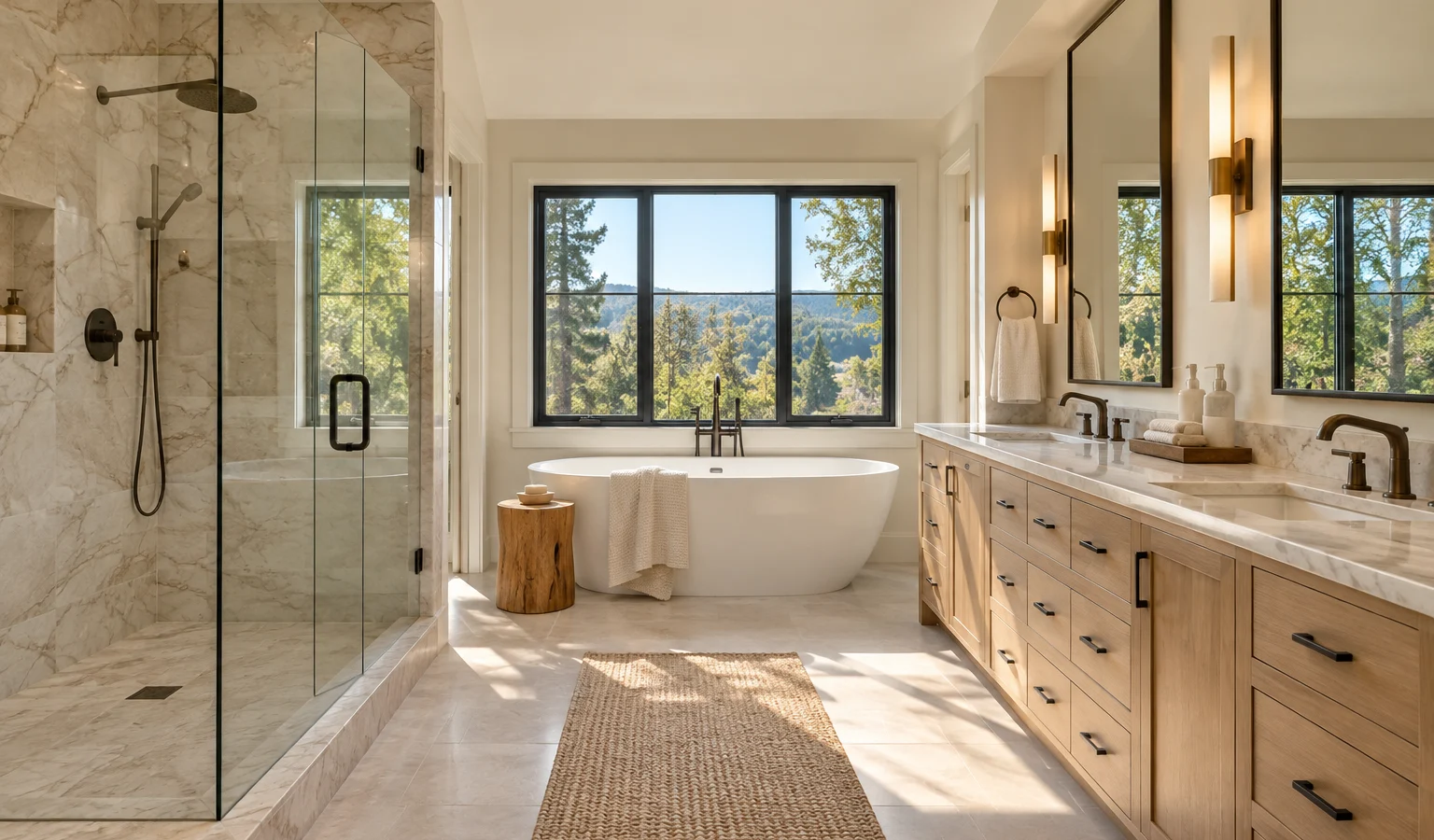
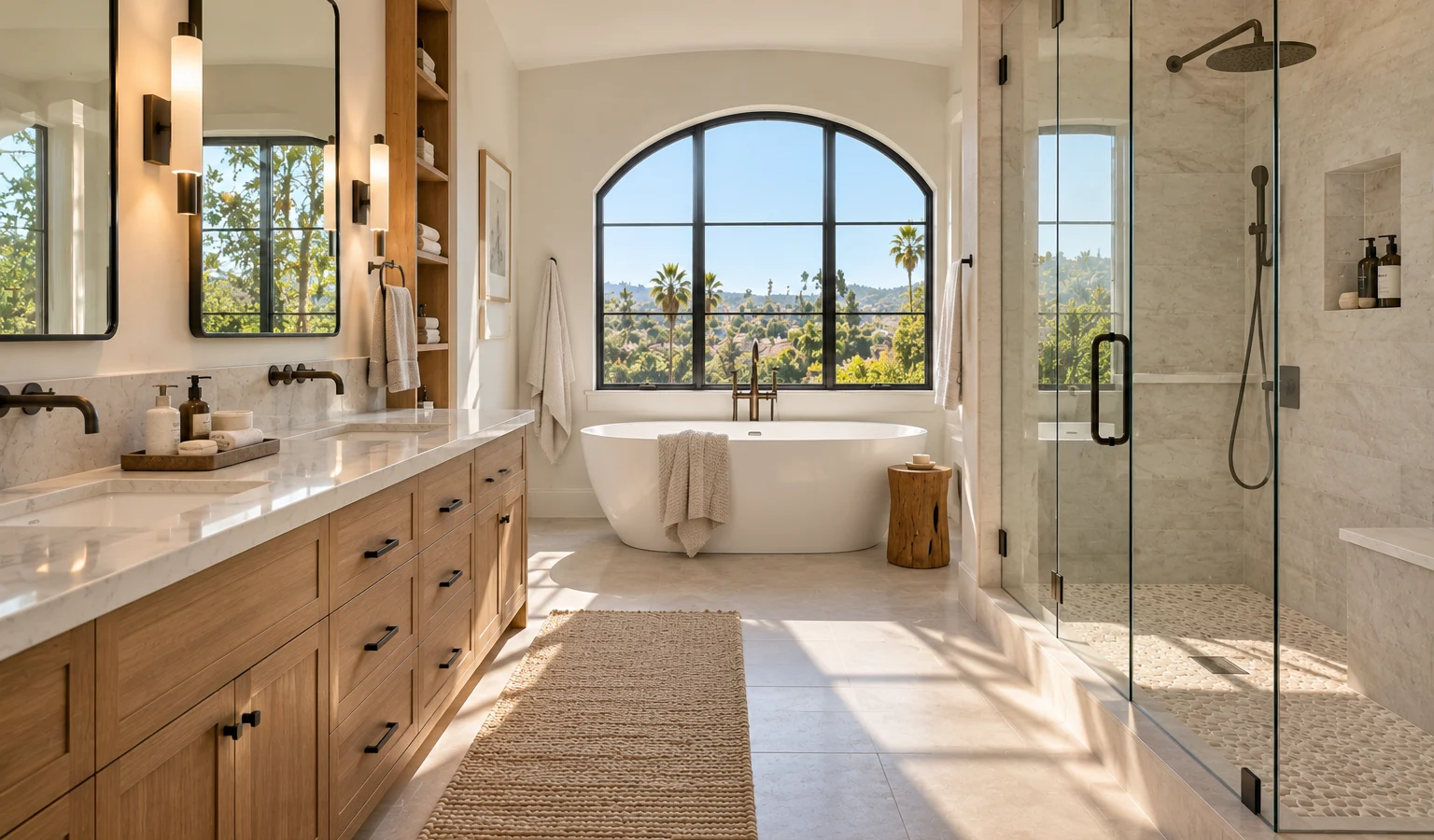
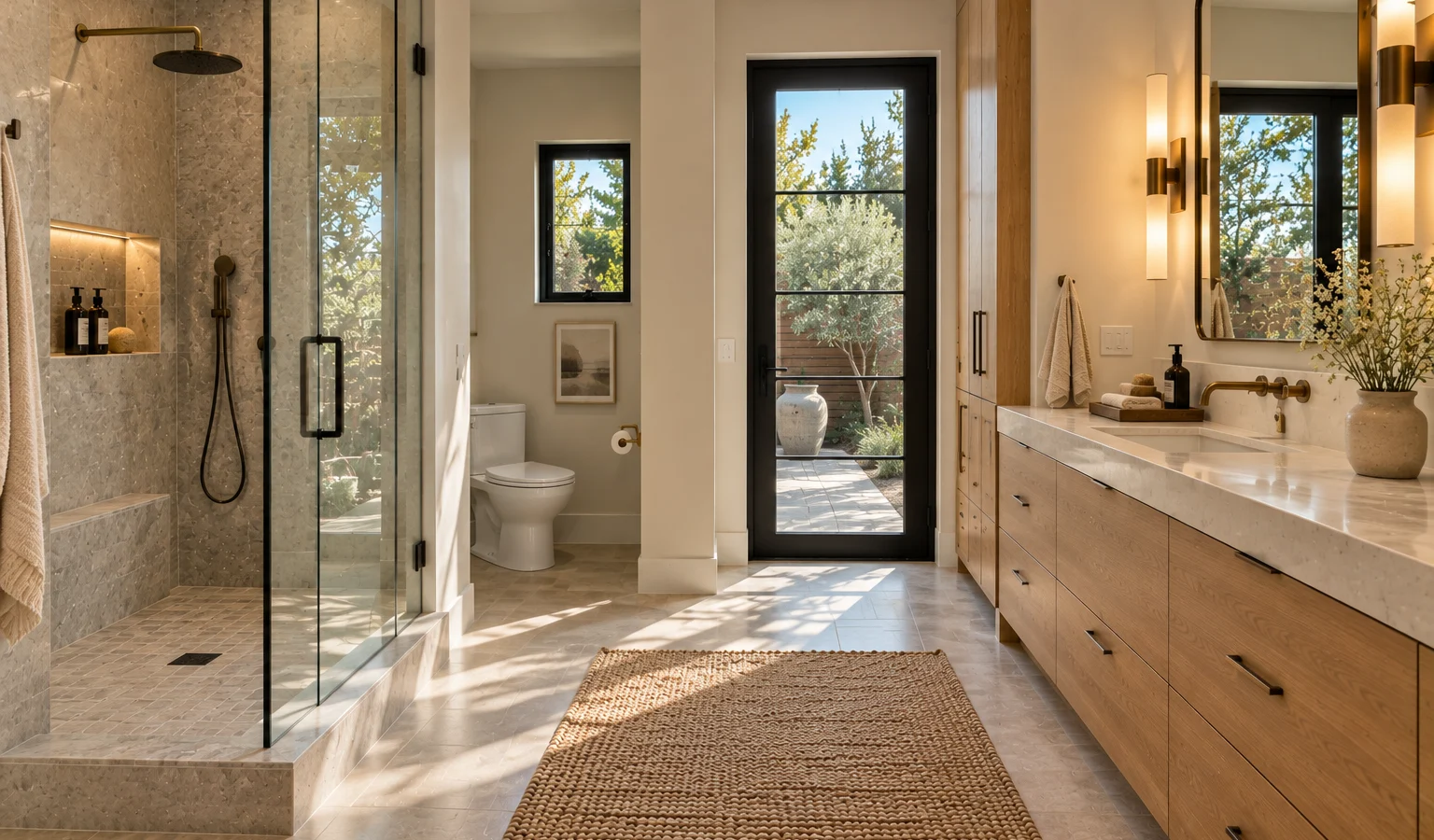
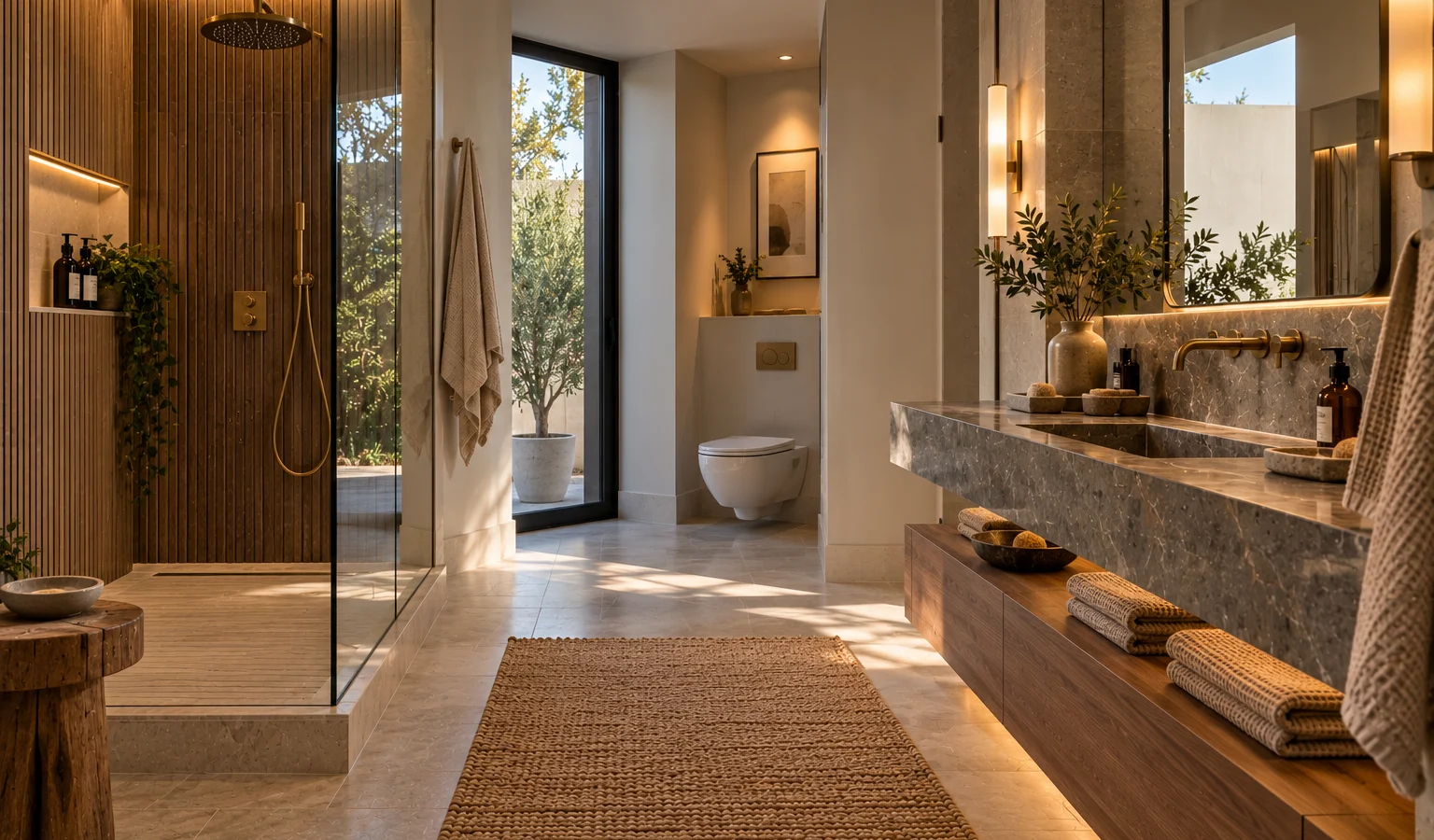
Cost guide
Bathroom Remodel Cost
United StatesNational ranges from what U.S. households paid contractors (Census American Housing Survey 2023). Full remodel is the upper quarter of hired projects. Prices as of August 2026. This is an estimate for planning, not a quote or a guaranteed Goodhaus price. Your actual cost depends on your home, your choices and your contractor, and quotes may be lower or higher. Open the cost calculator
Get Free Quotes