Article
Cement Tile Trades Handmade Pattern for Porosity and Sealing Work
In this article8 sections
Cement tile gives a handmade pattern whose color runs through the surface layer, and the trade-off is a porous, unfired material that needs repeated sealing, careful setting and acid-free cleaning. These are a trade magazine’s technical Q&A and two sellers’ statements, so ask the seller of the tile you choose for its own installation and care instructions.
| Point | What the sources say | Ask |
|---|---|---|
| Pro: handmade pattern in the surface layer | TileLetter says the pigment layer is hydraulically pressed into the surface and becomes part of the tile, and that the tiles have been installed successfully for over 150 years | To see a mockup with the irregularities shown |
| Con: porous and unfired | TileLetter calls porosity a huge challenge because the tiles are not fired and says to check them with a moisture meter before installation | Whether the installer checks moisture |
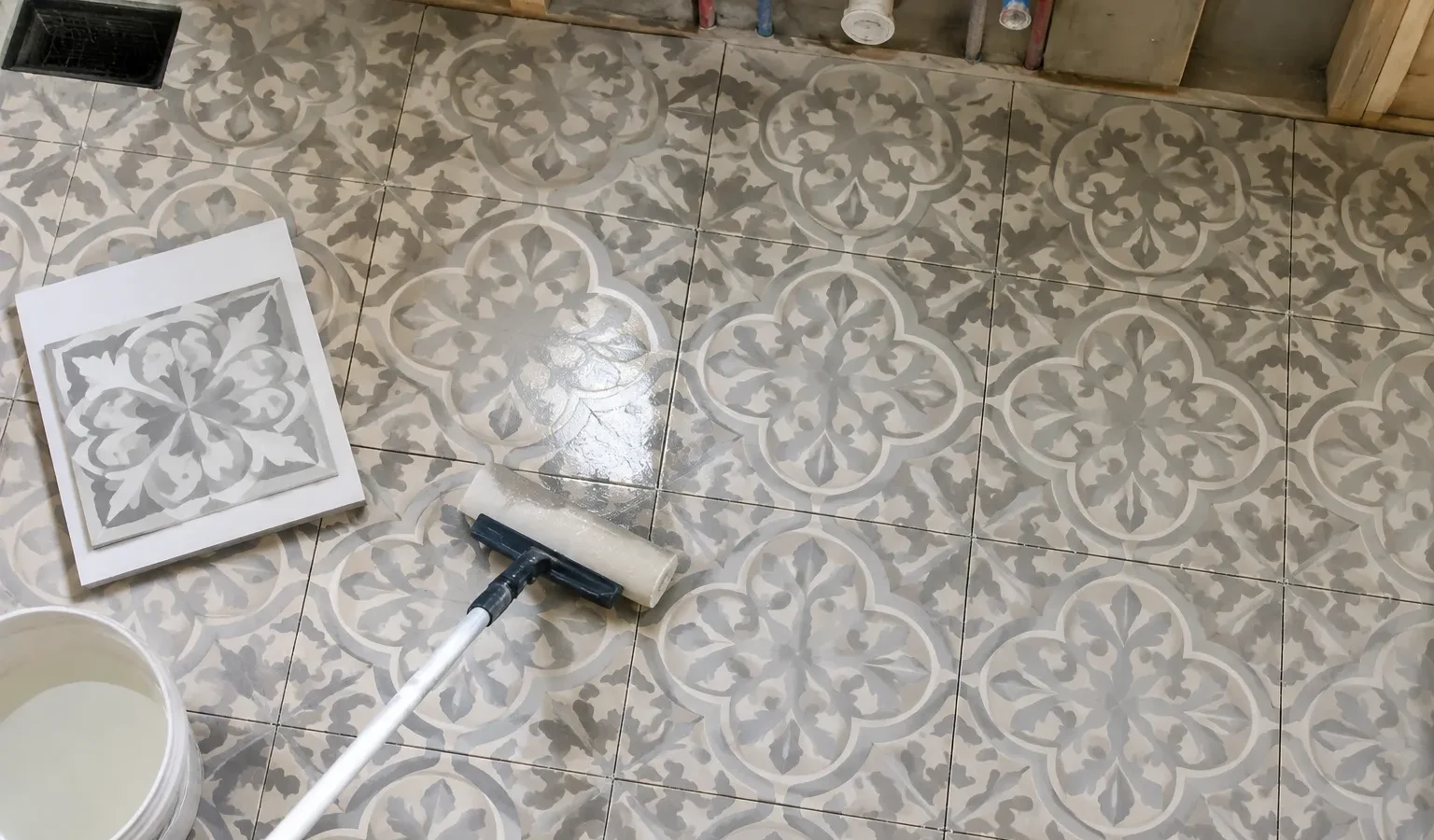
| Con: sealing | TileLetter says the tile needs sealing multiple times before grouting, and Granada says cement tile does need to be sealed | Who seals, with what, and how often to reseal |
| Con: cracking, chips and variation | TileLetter says the tiles are prone to cracking if the substrate is not prepared properly, the edges are fragile and the product varies | How the substrate will be prepared |
| Con: no ANSI A137.1 standard | TileLetter says the tiles do not meet ANSI 137.1 and that there are no ANSI standards for this specialty product yet | Which maker instructions govern |
What is cement tile?
TileLetter says cement or hydraulic tiles are handmade tiles that originated in Spain during the 1850s, that they are not fired and that they combine a layer of fine ground portland cement with a coarser layer of sand and cement. It says the pigment layer is hydraulically pressed into the surface and becomes a part of the tile, and that the tiles have been installed successfully for over 150 years even though installing them poses challenges.
Why does porosity and sealing matter?
TileLetter calls porosity a huge challenge because the tiles are not fired, notes that some arrive with high moisture content from the factory and says to check them with a moisture meter before installation. It says the material needs to be sealed multiple times before grouting to minimize or eliminate staining from the grout, that some manufacturers recommend several coats of sealer until the tile will not absorb more and that the step should be built into the price for labor and materials. Granada says cement tiles do need to be sealed because, like natural stone, cement is a porous material that absorbs stains and dirt if not sealed, and that topical sealers are not generally recommended for exterior use because the sun degrades them. Statements Tile says pre-sealing its cement tiles with a penetrating sealer before installation is required. TileLetter warns that if some tiles become stained it may be next to impossible to remove the staining.
What goes wrong in setting?
TileLetter says to take care with the substrate, because the tiles are prone to cracking if the substrate is not prepared properly, and that the edges are fragile and can chip if not handled with care. Granada says to take special care over a wooden subfloor so that the tiles do not crack as the subfloor expands and contracts. TileLetter says the product varies and that a mockup should be done to show customers the irregularities inherent in this type of tile. It also says these tiles do not meet ANSI 137.1 standards and that there are no ANSI standards for this specialty product yet. Ask for a mockup, ask how the substrate will be prepared and ask which maker instructions the installer will follow.
How should cement tile be cleaned?
TileLetter says the tiles are sensitive to acid, so acid should be avoided at all costs if the tiles will not be cleaned correctly. Statements Tile says acids, citrus juice, citrus cleaners, red wine and oils may etch concrete surfaces, that spills should be cleaned immediately and that a pH neutral, non-abrasive cleanser is suggested for routine cleaning. Ask the maker for its cleaner list and for how often it says to reseal.
What should you ask before you choose?
- Ask to see a mockup of the pattern with the irregularities visible.
- Ask who seals the tile, which sealer is used and how many coats before grouting.
- Ask how the substrate will be prepared and whether the installer checks tile moisture.
- Ask which maker instructions govern setting and grouting.
- Ask for the cleaner list and the resealing interval in writing.
Price the Sealing and Setting Work Along With the Tile
Keep the maker’s instructions and the sealing steps with your project papers, and when you request kitchen remodeling quotes, ask each contractor which sealer, substrate preparation and grout the price includes.
Photo Gallery






Cost guide
Bathroom Remodel Cost
United StatesNational ranges from what U.S. households paid contractors (Census American Housing Survey 2023). Full remodel is the upper quarter of hired projects. Prices as of August 2026. This is an estimate for planning, not a quote or a guaranteed Goodhaus price. Your actual cost depends on your home, your choices and your contractor, and quotes may be lower or higher. Open the cost calculator
Get Free QuotesCost guide
Kitchen Remodel Cost
United StatesNational ranges from what U.S. households paid contractors (Census American Housing Survey 2023). Full remodel is the upper quarter of hired projects. Prices as of August 2026. This is an estimate for planning, not a quote or a guaranteed Goodhaus price. Your actual cost depends on your home, your choices and your contractor, and quotes may be lower or higher. Open the cost calculator
Get Free Quotes