Article
What Does a Soft Floor Near the Toilet Mean, and When Should You Call a Pro?
In this article7 sections
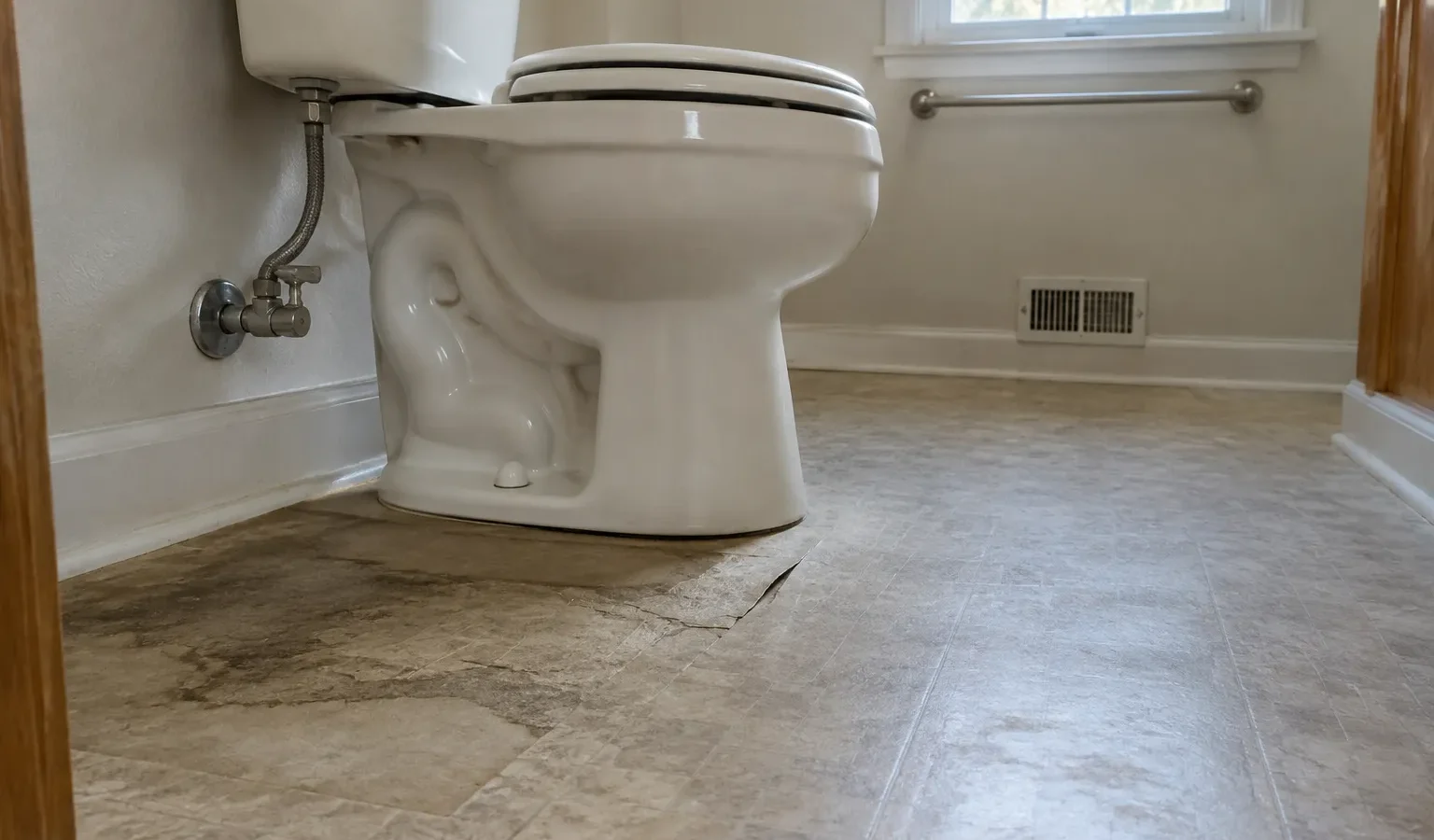
A floor that gives underfoot near a toilet is a sign to look for water. The EPA’s guidance is to fix plumbing leaks as soon as possible and to dry water-damaged areas within 24 to 48 hours to prevent mold growth, so treat the soft spot as urgent and keep weight off it until someone has looked at the framing underneath.
What can cause a floor to go soft near a toilet?
Water can reach the floor from several places: a supply line or shutoff valve that weeps, a worn seal where the toilet meets the drain, condensation on a cold tank, or repeated small overflows. Wood subfloor that stays damp loses strength over time, which is why a floor that flexes is more serious than a stain.
The EPA says the key to mold control is moisture control, and that porous materials such as carpet may have to be thrown away if they become moldy because the mold can fill their crevices and be difficult or impossible to remove completely.
What can you check safely yourself?
Look for staining, a musty smell, a toilet that rocks, or water around the base or the supply line, without standing on the soft area. If you suspect a leak, the EPA’s WaterSense program suggests checking your water meter before and after a two-hour period when no water is being used, and says that if the meter changes at all you probably have a leak.
If water is visibly escaping, close the toilet’s supply valve and, if it will not close, the house main, and then call a plumber.
Where should you stop and call a pro?
- The floor flexes or sinks under light weight, or the toilet rocks: stop using the room and call a contractor or plumber to open the floor and look.
- Water is near an outlet, switch or light fixture: stay clear of it and call an electrician.
- The flooring is old vinyl: the EPA lists vinyl floor tiles, the backing on vinyl sheet flooring and adhesives among the places asbestos may be found, so ask a professional to test before anyone scrapes or sands it.
- Mold covers more than about 10 square feet or the water damage is large: the EPA points to its remediation guidance for the larger problems and says homeowners may be able to handle patches under about 10 square feet themselves.
- You cannot find where the water comes from: a plumber can check the supply and drain connections.
What does a repair involve?
A lasting repair has four parts: stop the water, remove flooring and subfloor that stayed wet, dry the space and then rebuild. Ask the contractor to say in writing how far the damage extends, what was replaced and what was done about the source, and ask for photos of the framing before the new floor goes down.
The EPA notes that the longer mold grows, the more damage it can cause, so do not leave a suspect floor for later.
A Soft Floor Is a Water Clue and the Source Comes First
Keep weight off the soft area, stop the water, dry the space and bring in the right trade for what you find. Put the plumber’s findings and the repair scope in writing before the floor is closed again.
Photo Gallery







Cost guide
Bathroom Remodel Cost
United StatesNational ranges from what U.S. households paid contractors (Census American Housing Survey 2023). Full remodel is the upper quarter of hired projects. Prices as of August 2026. This is an estimate for planning, not a quote or a guaranteed Goodhaus price. Your actual cost depends on your home, your choices and your contractor, and quotes may be lower or higher. Open the cost calculator
Get Free QuotesCost guide
Kitchen Remodel Cost
United StatesNational ranges from what U.S. households paid contractors (Census American Housing Survey 2023). Full remodel is the upper quarter of hired projects. Prices as of August 2026. This is an estimate for planning, not a quote or a guaranteed Goodhaus price. Your actual cost depends on your home, your choices and your contractor, and quotes may be lower or higher. Open the cost calculator
Get Free Quotes